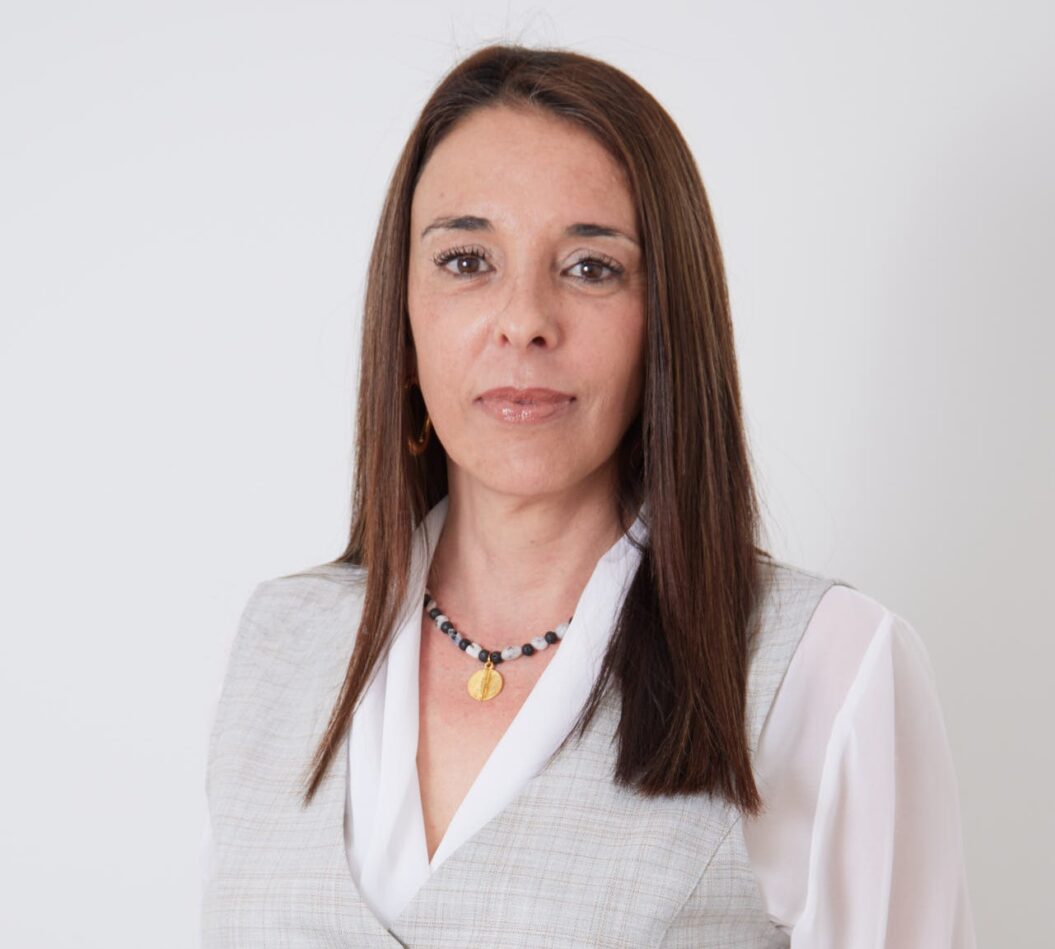
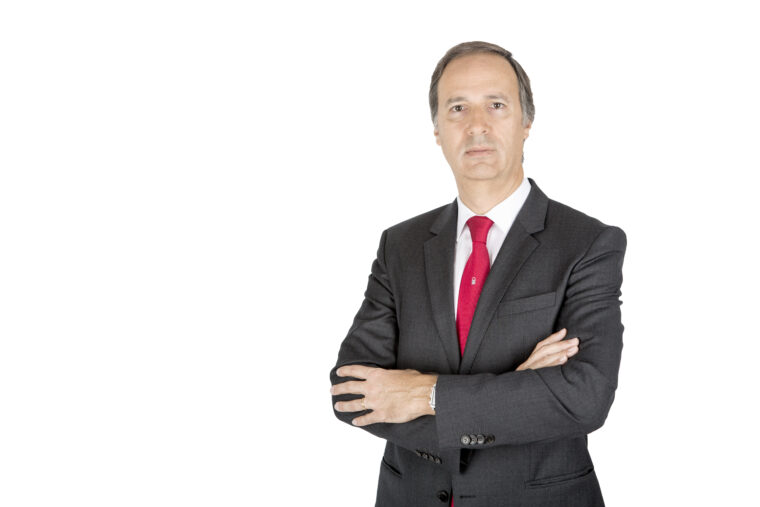
As part of the partnership between the Portuguese Diaspora Council and Jornal de Negócios, Carla Santos, Director of the Municipal Revenue Management Department at PublicSoft and Counselor of the Eastern Europe Regional Hub, was interviewed by Jornal de Negócios. In the interview, Carla Santos discussed her professional journey and identified competitive opportunities for Portugal, its economy, companies, and entrepreneurs in general.
1 – WHAT LED YOU TO LEAVE PORTUGAL?
I left Portugal in 1998, after completing a degree in Public Relations at Fernando Pessoa University and working as a Public Relations technician at the Aveiro City Council, where I was responsible for European exchange and twinning projects. It was precisely in one of these projects — the twinning between Aveiro and the city of Cholargos, in Greece — that I had my first contact with the country. The experience was transformative, both professionally and personally. I found in Greece a society in transition, with challenges and opportunities that coincided with my desire to build something new. I fell in love with the project, with Greek culture, and literally with my future husband. Our wedding has become a symbol of a living bridge between two countries with ancient histories and unexpected affinities. From then on, the idea of a Europe without borders took on a deeply personal meaning.
2 – WHAT ADVANTAGES OR DISADVANTAGES HAS THE FACT THAT YOU ARE PORTUGUESE BROUGHT YOU?
Being Portuguese proved to be a distinctive advantage. Our culture fosters empathy, adaptability, and creativity, qualities valued in demanding intercultural contexts such as Greek. Diplomatic tradition, respect for others and openness to the world are in our DNA. However, institutional distance and the absence of diaspora support networks posed challenges in the early years. This difficulty motivated me to get actively involved in the promotion of Portuguese culture among the Portuguese-descendant community.
3- WHAT OBSTACLES DID YOU HAVE TO OVERCOME AND HOW DID YOU DO IT?
Language was the first major obstacle. Mastering Greek was essential for everyday life, but also for taking on professional responsibilities. I invested time and effort in learning the language and culture. Adapting to the Greek administrative and legal system, which is very different from the Portuguese one, required flexibility and continuous learning. This ability was put to the test when I took over, for 16 years, the position of General Manager of the Municipal Company of Culture, Sport and Environment of the city of Pallini, on the outskirts of Athens, leading cultural, sports and environmental projects of local and regional impact. In addition, being a woman and a foreigner in a traditional sector implied resistance, which I faced with professionalism, dialogue and technical competence.
4 – WHAT DO YOU MOST ADMIRE ABOUT THE COUNTRY YOU ARE CURRENTLY IN?
Greece is a country of contrasts, but also of depth. I admire, first and foremost, the resilience of the Greek people — the way they face adversity with dignity and determination. In times of economic and social crisis, I have seen entire communities mobilize to help the most vulnerable. This solidarity is genuine and transversal.
I also value the central role of the family, respect for education and the appreciation of cultural roots. Greece has a unique civilisational heritage, but it does not live only on its past: there is a young, creative energy that wants to modernise the country and take an active role in Europe.
In cultural terms, one of the most notorious differences in relation to Portugal is in the way of working: in Greece, informality and improvisation are dominant traits. Decisions are sometimes taken at the last moment. I often joke that “in Greece nothing is programmed, but everything happens”. This ability to improvise—to make it happen, even under pressure—is something I’ve learned to respect and embody. I also admire the combative spirit of Greek society: a population that does not hesitate to question rules that it considers unfair. It is a posture that contrasts with a certain resignation still present in Portugal. In this sense, I recognize that I have become a little Greek — more nonconformist and more civically active.
5 – WHAT DO YOU ADMIRE MOST ABOUT THE COMPANY / ORGANIZATION YOU ARE IN?
At PublicSoft IKE, where I am Director of the Municipal Revenue Management Department, I admire the strategic vision and commitment to the modernization of local administration. The company invests in technical solutions adjusted to each municipality, promoting efficiency, transparency and citizens’ trust in institutions. It is an organization that combines technological innovation with civic purpose, with reference projects based on geolocation, AI and interoperability between systems.
6 – WHAT RECOMMENDATIONS DO YOU HAVE FOR PORTUGAL, ITS ENTREPRENEURS AND MANAGERS?
Portugal has, in its diaspora, an immense source of knowledge, experience and contact networks that remains underutilized. One of the first recommendations I make is: listen more to the Portuguese who are abroad.
Portuguese entrepreneurs should look at the diaspora not as a nostalgic audience, but as a strategic asset for internationalization. In many cases, we are the ones who open doors, who understand the dynamics of local markets and who can facilitate partnerships.
At a structural level, it is essential to invest in a more agile, less bureaucratic and more results-oriented administration. It is necessary to create effective instruments to encourage innovation, not only in the technological sector, but also in the social, environmental and cultural areas.
Finally, I believe that the creation of structured support networks for those who wish to return — or invest in Portugal from abroad — is urgent. Initiatives such as those of the Diaspora Council must have continuity and institutional support. Portugal and Greece, for example, share several challenges and economic potential. Creating partnerships in areas such as sustainable tourism, culture, the sea, organic farming or the digital economy could be the key to a stronger and more differentiating presence in the European market.
7 – IN WHICH SECTORS OF THE COUNTRY WHERE YOU LIVE CAN PORTUGUESE COMPANIES FIND CUSTOMERS?
Greece is experiencing a restructuring cycle that opens up opportunities in renewable energy (solar and wind), ICT applied to public administration, sustainable tourism, agri-food and consulting services linked to public management and European funds. The image of Portugal is positive and the products are valued. Portuguese companies in areas such as hospitality, construction and renewable energy have obtained good results. Examples such as Sonae, Martifer, Petrotec, PLM and several franchises demonstrate that there is already a significant presence, which must now be consolidated.
8 – IN WHICH SECTORS IN PORTUGAL COULD COMPANIES IN THE COUNTRY WHERE YOU ARE WANT TO INVEST?
Greek companies see Portugal as an attractive market and gateway to Western Europe and Portuguese-speaking countries. The sectors with the greatest potential are construction (especially urban rehabilitation), tourism, agri-food products (wine, olive oil, cheese, nuts) and technological services, especially those related to territorial intelligence, public management and interoperability. The complementarity between the two countries should be better explored.
9 – WHAT IS THE COMPETITIVE ADVANTAGE OF THE COUNTRY YOU ARE IN THAT COULD BE REPLICATED IN PORTUGAL?
Greece, despite the difficulties, maintains a strong link between citizens and public services. Even in large cities, there is a culture of proximity that facilitates civic participation and political accountability.
Portugal could benefit greatly from greater administrative decentralisation, bringing decision-making processes closer to local communities.
In addition, valuing local traditions and culture as an integral part of public policy is something that Portugal could also explore better — integrating heritage, gastronomy, identity and innovation into a more coherent vision of territorial development.
10 – ARE YOU THINKING OF RETURNING TO PORTUGAL? WHY?
Portugal is an essential part of my identity. I feel a deep connection with the language, culture and values that have formed me. However, at the moment, I feel that I can be more useful from Greece, promoting bridges, cooperation and sharing of experiences. The return is a medium-term desire, but it will depend on the conditions that allow me to maintain the level of civic, technical and human involvement that I have today.