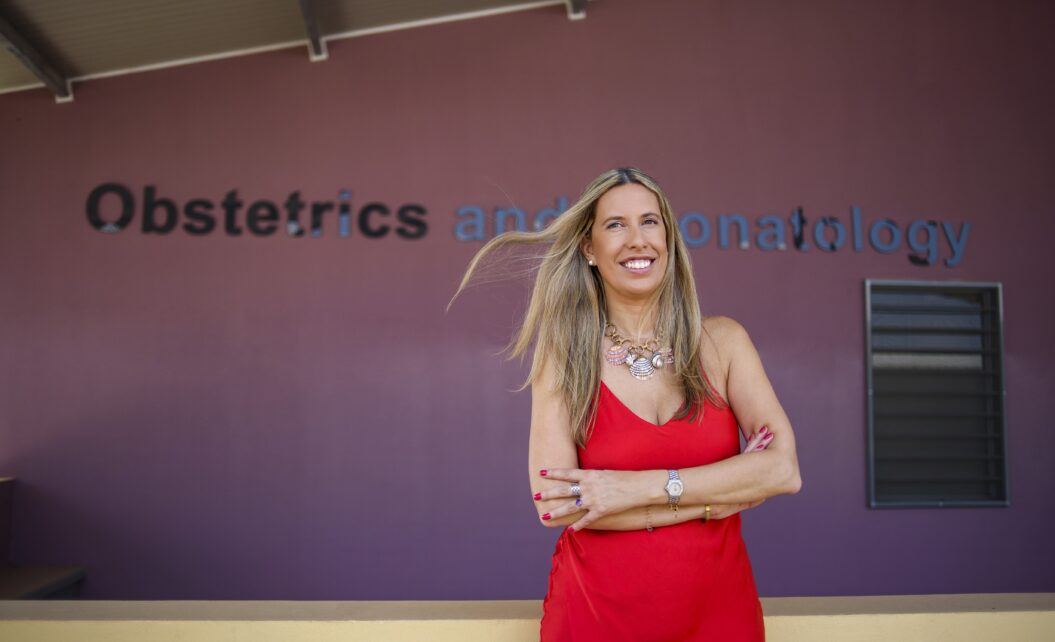
As part of the partnership between the Portuguese Diaspora Council and Jornal de Negócios, Diana Lopes, Director of Hospital Projects for South America at VAMED, and Counselor of the Africa Regional Hub, was interviewed by Jornal de Negócios. In the interview, Diana Lopes discussed her professional journey and identified competitive opportunities for Portugal, its economy, companies, and entrepreneurs in general.
1 – WHAT LED YOU TO LEAVE PORTUGAL?
The desire to grow professionally and explore new cultures was decisive for my departure from Portugal. From an early age I had contact with the international world and, after finishing the Civil Engineering course at FEUP, I decided to join the INOV Contacto program, having been placed in Romania. Later, with the impact of the 2010-2012 economic crisis in Portugal, I looked for new opportunities abroad, which led me to settle in Africa. More recently, the spirit of mission and global challenges in health have led me to Guyana.
2 – WHAT ADVANTAGES OR DISADVANTAGES HAS THE FACT THAT YOU ARE PORTUGUESE BROUGHT YOU?
Being Portuguese has been, most of the time, an advantage. In environments like Ghana, the professionalism, adaptability, and work ethic of the Portuguese are highly valued. In Guyana, there is a curious historical connection: many Guyanese are descendants of Portuguese, especially from the island of Madeira, and still maintain cultural, linguistic and affective ties with Portugal. Although there are currently few Portuguese working in the country, I notice a growing interest. This recognition and familiarity with Portugal opens doors and creates immediate empathy, which facilitates integration and collaboration. Our presence arouses positive curiosity, which can be an asset for those who want to start professional activity in the region.
3- WHAT OBSTACLES DID YOU HAVE TO OVERCOME AND HOW DID YOU DO IT?
Adapting to different cultural and administrative realities was a constant challenge. In Africa, for example, the processes and the pace of work are very different from those in Europe. In contexts such as Guyana, it is necessary to deal with structural and resource constraints. I overcame these obstacles with empathy, active listening, and a strong ability to adapt. I also learned how to lead multicultural teams, respecting local contexts and promoting collaborative solutions.
4 – WHAT DO YOU MOST ADMIRE ABOUT THE COUNTRY YOU ARE CURRENTLY IN?
In Guyana I admire multiculturalism, where different ethnicities, religions and traditions coexist in harmony. The natural wealth, with tropical forests, majestic rivers and impressive biodiversity, a true national treasure, and the resilient spirit of the population. In Ghana, where I had the privilege of living for more than a decade, what struck me most was the strong sense of community, the joy in everyday life, whether in the vibrant colors of the clothes, the spontaneous dances or the generous smiles that welcome any visitor. Ghanaian hospitality and the sense of belonging it creates is enduring and transformative. Both countries have in common the desire to evolve and modernize, without losing sight of their values, identities and cultural roots, which represents a valuable collaboration opportunity for foreign professionals and companies.
5 – WHAT DO YOU ADMIRE MOST ABOUT THE COMPANY / ORGANIZATION YOU ARE IN?
At VamedWWH I admire the strategic vision and commitment to sustainable solutions in healthcare. The company has an innovative model of modular hospitals, which allows it to offer advanced medical care anywhere in the world, quickly and efficiently. Working in an organization with this global mission, and where Portuguese engineering is valued, is highly motivating.
6 – WHAT RECOMMENDATIONS DO YOU HAVE FOR PORTUGAL, ITS ENTREPRENEURS AND MANAGERS?
Portugal must believe more in its abilities and assume its place on the global stage with conviction. We are a country with a solid foundation of technical knowledge, creativity and a historical resilience that allows us to adapt and thrive in challenging contexts. This combination is a strategic asset that must be valued and designed with ambition. I recommend Portuguese entrepreneurs and managers to invest in internationalization in a more structured way, with a long-term vision and a sustainable approach. It is not just about exporting products or services, but about building presence, influence and lasting partnerships in foreign markets. Economic diplomacy should be seen as an essential tool, capable of opening doors, creating bridges and positioning Portugal as a relevant and reliable partner. The creation of alliances with public and private entities, both national and international, can accelerate processes of entry and consolidation in new markets.
A valuable, and often underutilized, resource is the Portuguese diaspora. Present in the four corners of the world, our community is made up of qualified professionals, visionary entrepreneurs and leaders with in-depth knowledge of local markets. They are people who, due to their experience, can play key roles as facilitators, ambassadors of Portuguese culture and bridges between different economic and social realities.
In short, it is time for Portugal to think globally, act strategically and trust in the strength of its people, ideas and values. The future belongs to those who dare to build bridges and explore new frontiers with courage and vision.
7 – IN WHICH SECTORS OF THE COUNTRY WHERE YOU LIVE CAN PORTUGUESE COMPANIES FIND CUSTOMERS?
In both Ghana and Guyana, there is a growing demand for solutions that respond to the challenges of sustainable development and infrastructure modernization, in the areas of construction, health, renewable energy, education and information technology.
In construction, there is a need for housing, urban infrastructure, and civil engineering projects that respect environmental and social criteria.
In healthcare, the demand for medical equipment, digital solutions and specialized training makes room for companies with experience in innovation and hospital management.
Renewable energies, especially solar and hydro, are priority areas, with government incentives and clear openness to technological partnerships. Education, in turn, requires pedagogical content, digital platforms and teacher training, while information technologies represent a fertile field for solutions in connectivity, digital security and digital transformation of public and private services.
Portuguese companies with innovative proposals, international experience and commitment to local empowerment can find partners and customers with great potential in these countries.
8 – IN WHICH SECTORS IN PORTUGAL COULD COMPANIES IN THE COUNTRY WHERE YOU ARE WANT TO INVEST?
Portugal is attractive to foreign investors in areas such as agri-food, clean energy, sustainable tourism, education and health. The Portuguese innovation ecosystem and its strategic position as a gateway to Europe can be well used by Ghanaian or Guyanese companies that want to diversify markets.
The Portuguese agri-food sector stands out for the quality of its products, sustainable agricultural practices and growing commitment to exports. Clean energies, with strong investment in solar, wind and hydro, reflect the country’s commitment to the energy transition and open space for technological partnerships. Sustainable tourism, in turn, benefits from Portugal’s natural and cultural diversity, being a promising area for business models that value authenticity and positive impact on local communities.
Portugal’s geographical position, as a gateway to Europe and a platform for connecting with Africa and Latin America, is a strategic advantage that can be well taken advantage of by Ghanaian or Guyanese companies interested in diversifying markets, establishing commercial partnerships and gaining international scale.
9 – WHAT IS THE COMPETITIVE ADVANTAGE OF THE COUNTRY YOU ARE IN THAT COULD BE REPLICATED IN PORTUGAL?
In Guyana, proximity to markets such as the US, Canada and the Caribbean is a significant advantage. In Ghana, agility in decisions and informality in dealing facilitate partnerships. Portugal could benefit from faster public and private processes, and a more practical and agile approach to project implementation.
10 – ARE YOU THINKING OF RETURNING TO PORTUGAL? WHY?
Portugal will always be my country. I would like to return, eventually, to contribute with the experience gained and help strengthen the links between Portugal and the markets where I have been operating. For now, I continue to believe that I can be more useful and relevant abroad, as an informal ambassador of Portugal in the world.