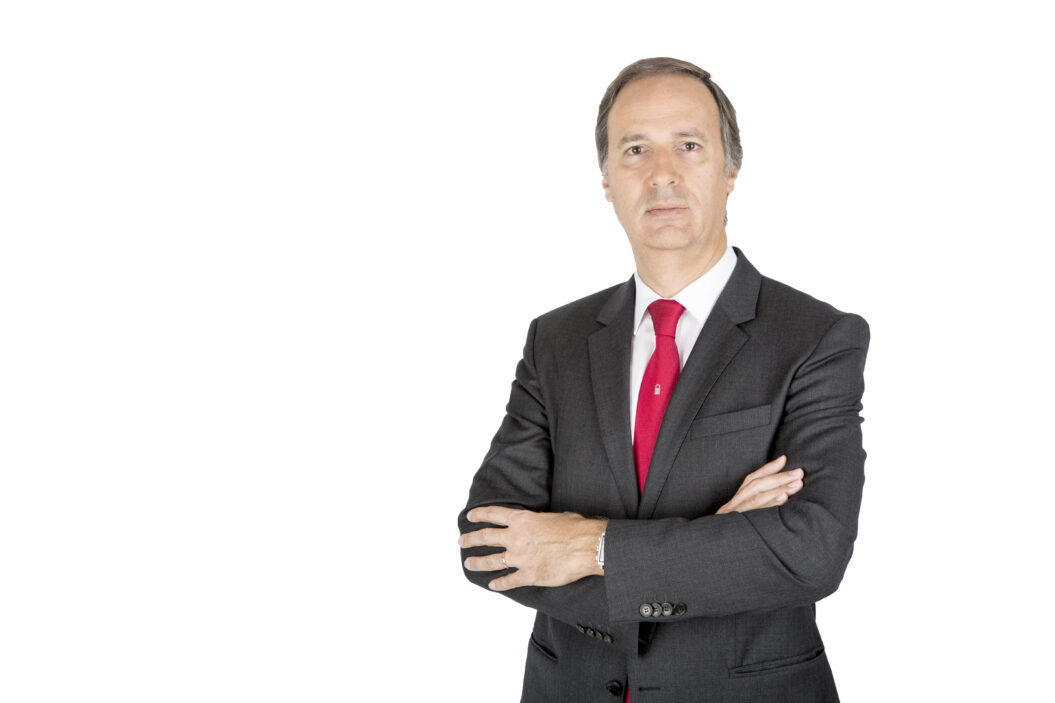
As part of the partnership between the Portuguese Diaspora Council and Jornal de Negócios, Luís Almeida, CEO at Transcom SA, and Counselor of the Africa Regional Hub, was interviewed by Jornal de Negócios. In the interview, Luís Almeida discussed his professional journey and identified competitive opportunities for Portugal, its economy, companies, and entrepreneurs in general.
1 – WHAT LED YOU TO LEAVE PORTUGAL?
My departure from Portugal was less an isolated decision and more the natural consequence of a path that I have always sought to align with an international vision. The experience in Macau, within the framework of the China-Portuguese-speaking Countries cooperation, allowed me to understand how economic and geopolitical flows are repositioned at a global level. It was in this context that leadership in Mozambique emerged: a space where opportunities for economic growth intersect, a strong need for qualified human capital and the possibility of designing structural transformation strategies. At the same time, I realized that leaving Portugal allowed me to test my leadership skills in scenarios of greater uncertainty and complexity. It was in less predictable environments that I was able to develop innovative solutions and gain an early reading of major global trends, from the centrality of Asia in international trade to the growing role of African emerging markets.
2 – WHAT ADVANTAGES OR DISADVANTAGES HAS THE FACT THAT YOU ARE PORTUGUESE BROUGHT YOU?
Being Portuguese is, in itself, a competitive advantage in several contexts. Portugal has a network of historical and cultural influence in Portuguese-speaking countries, which even today facilitates the creation of trust. In addition, Portugal is in the heart of Europe, but with a natural bridge to Africa and South America. This strategic position, combined with the international credibility that the Portuguese passport provides, creates valuable symbolic capital in emerging markets.
On a personal level, being born in Mozambique gave me an immediate affective and cultural connection to the country and its people. Sharing the language and common references has made it easier to create genuine and close relationships, built on mutual trust. In addition, being Portuguese has often put me in a unique position of “bridge”: able to dialogue with Europe and at the same time understand African codes. This hybrid identity gave me the flexibility to move between different cultures and forums, something that I consider essential today in the field of economic and business diplomacy.
3- WHAT OBSTACLES DID YOU HAVE TO OVERCOME AND HOW DID YOU DO IT?
The main obstacles were not only conjunctural — financial crises, regulatory instability, exchange rate volatility — but above all structural: the need to align different business cultures, manage multicontinental teams and maintain strategic focus in an often adverse environment. The way to overcome them has always been the same: clear vision, strategic discipline and focus on sustainable results. On a personal level, I learned that the ability to listen, to understand cultural codes and to adjust leadership to different sensitivities is decisive. I had to develop strategic patience — realizing that in some contexts speed is not the most important thing, but consistency and the ability to build trust are. That learning has shaped me as a leader and as a person.
4 – WHAT DO YOU MOST ADMIRE ABOUT THE COUNTRY YOU ARE CURRENTLY IN?
Mozambique has a scale and diversity that make it unique: a vast territory, abundant natural resources and a young, dynamic population, eager for opportunities. What I admire most is precisely this vitality — the capacity of a country that, despite the difficulties, continues to look to the future with ambition. It is this transformative energy that makes Mozambique so relevant in the African context.
But there is also a geopolitical dimension that I consider fundamental: the country’s strategic location in the Indian Ocean. Mozambique’s extensive coastline places it at the centre of important international logistics corridors, with the potential to connect the Atlantic and the Indian Ocean, between Southern Africa and the Asian market. This geostrategic positioning is an asset of enormous value in the twenty-first century.
5 – WHAT DO YOU ADMIRE MOST ABOUT THE COMPANY / ORGANIZATION YOU ARE IN?
At Transcom I admire the strategic vision of investing in what I consider to be the true engine of transformation of any country: knowledge. The investment in demanding education, which prepares highly qualified staff in engineering, management and technical areas, is an investment in human capital and, consequently, in the country’s economic sovereignty. It is a project that does not only train professionals — it trains agents of change capable of accelerating development.
I see Transcom not only as a company in the area of education, but as a true incubator of talent. Many of its former students now occupy prominent positions in strategic companies and projects in Mozambique and abroad. This impact on the ecosystem translates into a direct contribution to reducing human capital deficits in critical areas, strengthening the country’s competitiveness and projecting its future.
6 – WHAT RECOMMENDATIONS DO YOU HAVE FOR PORTUGAL, ITS ENTREPRENEURS AND MANAGERS?
Portugal needs to strengthen its global vocation. We cannot limit ourselves to the European market – it is crucial to look at emerging markets with a long-term strategy. I recommend three axes: ambitious internationalization, investment in technological innovation and investment in the qualification of human resources. Portugal can assert itself as an innovation hub between Europe, Africa and Latin America, but it needs to align capital, talent and vision. It is also essential to enhance diasporas and business clusters. Internationalization should not only be the export of goods and services, but also management models and technological solutions to challenges such as energy transition, digitalization and sustainability. Portuguese companies must also see internationalization as an integral part of their growth strategy, betting on alliances with local players and public-private partnerships. Only then will they be able to adapt business models to the cultural, economic and regulatory context of each market.
7 – IN WHICH SECTORS OF THE COUNTRY WHERE YOU LIVE CAN PORTUGUESE COMPANIES FIND CUSTOMERS?
Mozambique offers opportunities in structuring sectors: infrastructure, energy, agriculture, transport, education and services. The key is to understand that the investment must be made with a medium and long-term vision. Portuguese know-how is recognized, but it is essential to adapt it to the local context, establishing partnerships and cultivating resilience.
8 – IN WHICH SECTORS IN PORTUGAL COULD COMPANIES IN THE COUNTRY WHERE YOU ARE WANT TO INVEST?
More than investing directly, I see enormous potential in strategic partnerships. Tourism and services are obvious areas, but the real value will be in the exchange of people, skills and know-how. When recent Mozambican engineering graduates work in Portuguese companies, both countries win: Portugal strengthens its connection to Africa and Mozambique accelerates the development of its human capital. It is a virtuous circle of strategic cooperation.
9 – WHAT IS THE COMPETITIVE ADVANTAGE OF THE COUNTRY YOU ARE IN THAT COULD BE REPLICATED IN PORTUGAL?
Mozambique has unique advantages: vast natural resources, arable land, energy, a strategic coastline and, above all, a young population. This is not replicable. But Portugal can learn from Mozambican resilience — the ability to do a lot with few resources, to find creative solutions in contexts of adversity. This mentality is an asset that can strengthen Portuguese competitiveness in uncertain global markets. I would add the entrepreneurial spirit of Mozambican youth. Despite material limitations, many young people show a remarkable capacity for initiative, creating local businesses with great agility. This dynamism can inspire Portugal, especially in strengthening the startup and SME ecosystem, where speed and creativity are decisive factors for success.
10 – ARE YOU THINKING OF RETURNING TO PORTUGAL? WHY?
After leading a banking turnaround in the middle of the crisis (2014-2020) and doubling, in four years (2020-2024), the turnover of a 25-year-old company in Mozambique, I feel that the time has come to return this experience to my country. Portugal needs managers who understand complex markets, who know how to transform adversity into growth, who are prepared to project Portuguese companies in the world and who know well the dynamics and complexity of managing multicultural Boards of Directors, especially with the current demands of Corporate Governance And Sustentabilidade.No personal level, there is also an emotional dimension. After so many years away, it’s natural to feel the urge to return and give back. I want to bring with me not only the accumulated technical and strategic knowledge, but also the resilience, global vision and ability to find solutions that I learned in Africa. I return, therefore, not as an “end of cycle”, but as the beginning of a new stage at the service of Portugal.