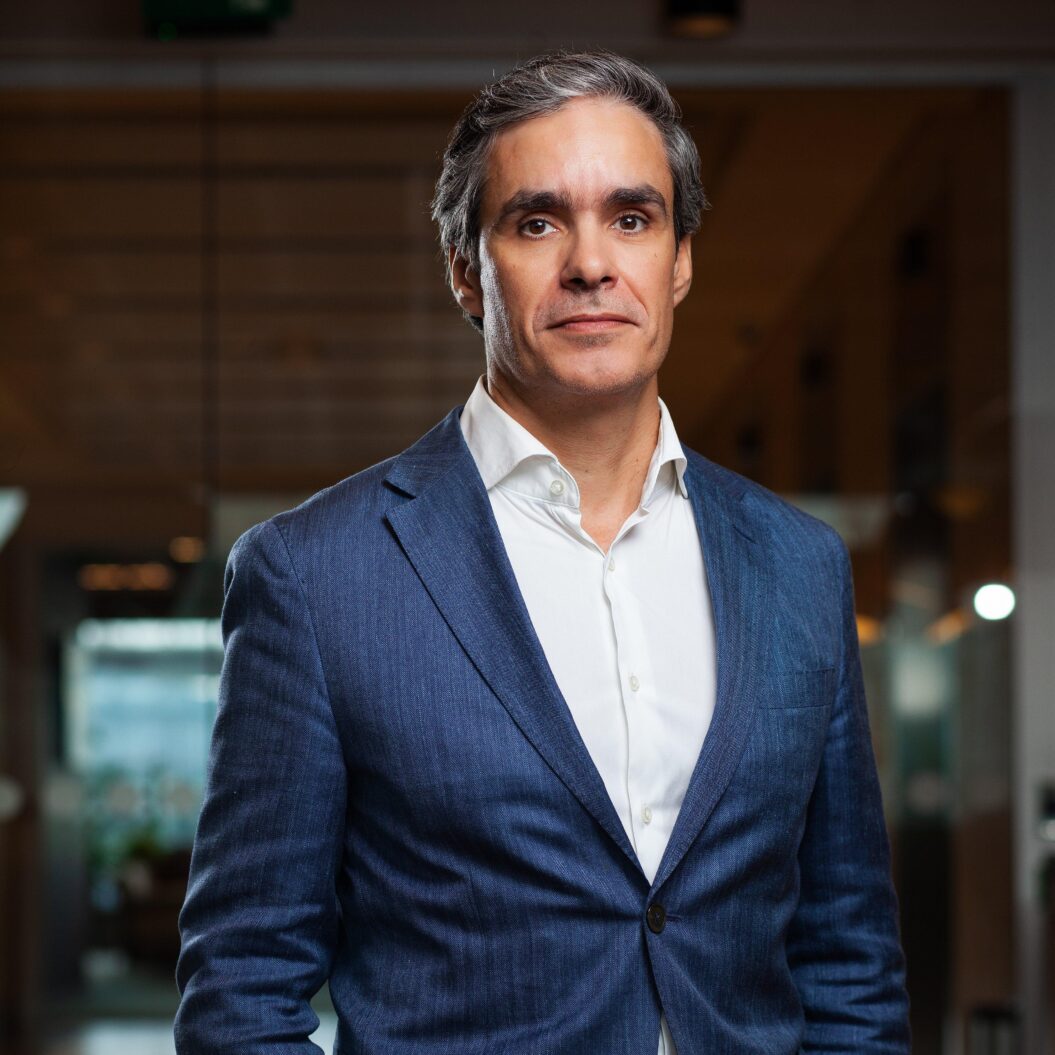
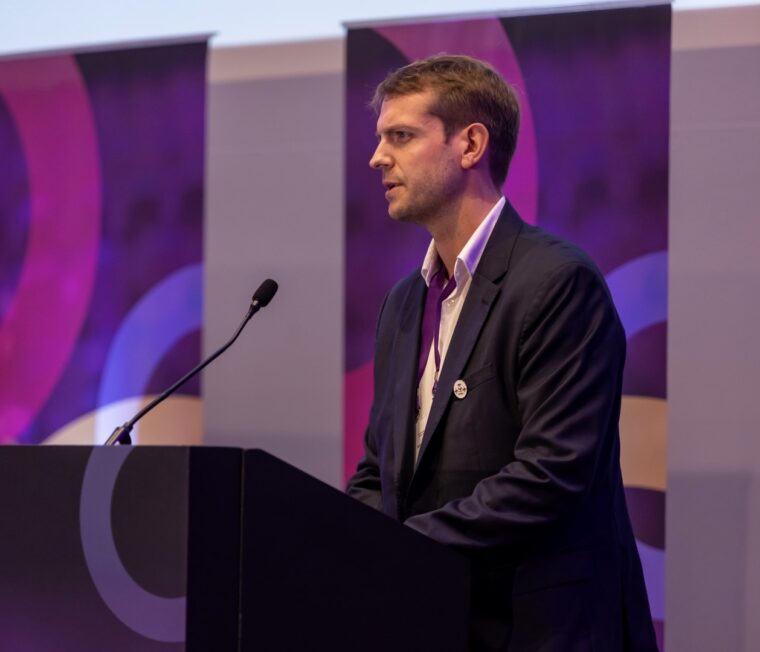
As part of the partnership between the Portuguese Diaspora Council and Jornal de Negócios, André Pinto, Managing Director and Senior Partner at Boston Consulting Group (BCG), where he leads the Energy practice in Brazil, and member of the Portuguese Diaspora Council, shares an international career shaped by the desire to explore the world and grow professionally beyond Portugal. In the interview, he highlights the qualities that distinguish Portuguese professionals in international contexts, namely technical solidity, flexibility and the ability to build relationships of trust. He admires Brazil’s energy, scale and its leading role in the energy transition. He argues that Portugal can play a strategic role as a bridge between Brazil and Europe, leveraging historical and cultural affinities to strengthen investment, economic cooperation and the internationalization of companies.
1- What led you to leave Portugal?
I left Portugal with the desire to grow and to discover the world. From an early stage, I sought experiences that would take me out of my comfort zone. The first was in Sweden, through Tetra Pak, where I was exposed to a very demanding and structured environment. Later, I decided to pursue an MBA in Barcelona at IESE, not only to complement my engineering background with Finance and Management, but also because my wife, Elena, is Spanish and Barcelona became the natural meeting point between our personal and professional lives.
After that came Chile and Brazil, always driven by curiosity to learn and to build something meaningful in each place. These four geographies have profoundly shaped the way I see the world and how I lead. It has been more than twenty years since I left Portugal, but Portugal has never left me.
2- What advantages or disadvantages has being Portuguese brought you?
Being Portuguese has mostly brought advantages. We have a combination of technical solidity, flexibility and empathy that makes us effective in multicultural environments. The fact that we are good listeners and able to adapt is a distinctive trait.
In addition, Portuguese people are viewed very positively in almost every part of the world, which is a huge advantage. We are a small country in size but with great historical achievements and a strong reputation built over centuries of openness to the world. That legacy of curiosity, courage and adaptability remains alive in the way we work and interact. Our ability for dialogue and our constructive mindset help create bridges and generate trust, something essential in international leadership.
3- What obstacles have you had to overcome and how did you do it?
The greatest challenges have always been cultural and personal adaptation: understanding the context and defining how I could contribute to creating value in each new situation. Working and leading teams in Portugal, Sweden, Spain, Chile and Brazil requires understanding very different motivations, styles and rhythms. You need to know how to listen, adjust and inspire in different ways.
At the same time, there is the family dimension: moving to a new country means rebuilding routines, networks and stability. In that respect, I have had the unconditional support of Elena and our three children, who have accompanied me at every stage of this journey. That strong family foundation has been fundamental in maintaining balance and motivation along the way.
4- What do you most admire about the country where you are now?
Brazil has a unique energy. It is a vibrant, creative country with an enormous capacity to reinvent itself. Leading BCG’s Energy practice here is a privilege — the country is a true global laboratory for the energy transition.
The diversity of Brazil’s energy matrix is remarkable, and bioenergy in particular is a striking example of how agricultural potential can drive sustainability. Brazil combines scale, talent and a strong will to deliver results, which makes this market fascinating for those working in transformation and development.
5- What do you most admire about the company/organization you work for?
What I admire most about BCG is the constant pursuit of the right answer. The combination of analytical rigor with empathy and close relationships with clients is what makes us different. BCG is not just a strategic consulting firm — it is a catalyst for change.
We work to help our clients achieve competitive advantage and tangible results, supporting them as they navigate complex transitions with ambition and clarity. But what truly distinguishes BCG are its people. It is a place filled with extraordinary professionals in terms of competence, commitment and values. Working with people of that caliber is, every day, a source of inspiration and continuous learning.
6- What recommendations would you give to Portugal and to its entrepreneurs and managers?
Portugal has a unique opportunity to establish itself as Brazil’s natural gateway to Europe and, at the same time, as the entry point for the best European ideas into the Brazilian market. We have cultural and historical affinities that place us in a privileged position to play this bridging role between two complementary economies.
Portugal can help translate the risks and complexity of the Brazilian market into language that is understandable and appealing to international investors, facilitating partnerships and capital flows. At the same time, Brazil is an almost limitless market for Portuguese entrepreneurs who bring solid, differentiated and scalable business models. There is enormous potential to transform this historic relationship into a true economic lever for the future.
7- In which sectors of the country where you live could Portuguese companies find clients?
Portugal can find clients and partners in Brazil especially in businesses where it has technological advantages. However, the greatest opportunities lie in understanding the competitive strengths of Portuguese companies and how these fit into the Brazilian reality, always investing with a long-term perspective.
Brazil is a market of enormous scale and diversity, but it is also more volatile than the European one, which reinforces the importance of consistent strategies, vision and patience. Sectors such as agriculture and agribusiness, renewable energy, sustainability, and the oil and gas sector continue to offer broad opportunities for cooperation, particularly when they combine technology, efficiency and local knowledge. Portuguese companies that arrive with strong proposals, adaptability and trusted partners can successfully establish their presence. Brazil values and rewards long-term relationships and consistency — those who invest with vision, patience and credibility tend to achieve sustainable results.
8- In which sectors of Portugal might companies from the country where you live want to invest?
Brazil has a scale and dynamism that have enabled it to stand out globally in several sectors. I see opportunities for Brazilian companies to expand into Europe — and particularly into Portugal — in areas such as digital banking, mining, renewable energy and logistics.
These are sectors in which Brazil has developed distinctive capabilities and where its companies could gain competitive advantage by establishing a closer and more structured European presence. Portugal, due to its geographical position, institutional stability and qualified talent, can be the natural entry point for that expansion.
Furthermore, the country offers a favorable environment for innovation and a strategic connection both to the European Union and the Lusophone world. This combination creates a unique opportunity for Brazilian companies seeking to diversify markets, connect with technological ecosystems and strengthen their global presence with a solid and competitive base.
9- What competitive advantage of the country where you live could be replicated in Portugal?
Brazil stands out for its agility and its capacity to execute in contexts of ambiguity. It is a country that does not wait for everything to be perfect before acting — it experiments, adjusts and moves forward. This attitude results from a competitive and often unpredictable environment that requires quick and creative solutions.
The scale of the market and the country’s cultural diversity reinforce this practical and entrepreneurial mindset, where innovation often emerges more from necessity than from planning. Portugal could benefit greatly from this approach. Being faster to test ideas, less risk-averse and more collaborative across sectors would help accelerate innovation and decision-making.
The combination of European discipline and method with Brazilian energy and adaptability would be a powerful model of competitiveness and a source of inspiration for facing the transformational challenges of the future.
10- Do you plan to return to Portugal? Why?
I have lived outside Portugal for more than twenty years, and thirteen of those years have been in Brazil — a country that has become part of our lives. It was here that our family grew, that we built a network of friends and where I found a professional purpose linked to the transformation of the energy sector. Brazil has taught me a great deal about scale, diversity and resilience, and today it feels like a second home.
In the future, however, our lives may be divided between these two geographies: one foot in Brazil and the other in the Iberian Peninsula. Nothing has been decided yet, and we are not sure what it will look like, but it is a natural possibility after so many years abroad. Our family and professional lives have been shaped on both sides of the Atlantic, and that reflects how we see the future — connected and open to different paths. Portugal will always be home, and if one day I return, it will be to continue building bridges and bringing with me everything we have learned from this global experience.