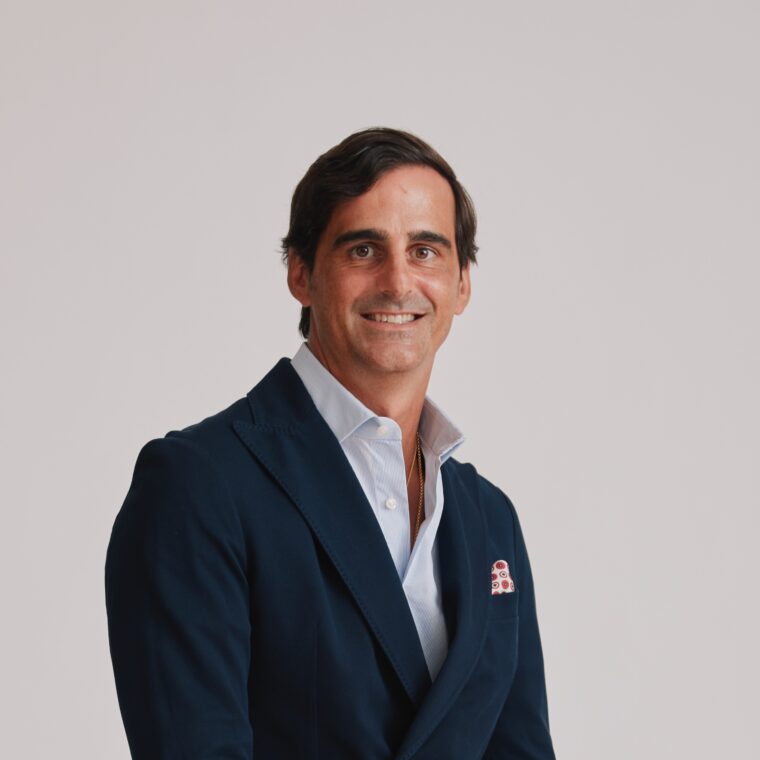
As part of the partnership between the Portuguese Diaspora Council and Jornal de Negócios, Rodrigo Camacho, Economist at the Government of Abu Dhabi, shares insights into his professional journey in the United Arab Emirates and his vision for strengthening Portugal’s economic competitiveness.
1 — What led you to leave Portugal?
First of all, personal enrichment. Having lived, studied and worked until the age of 25 almost exclusively in Portugal (with a brief stint in Tanzania on a voluntary basis), I felt that I needed to spend a season abroad to grow and expand my horizons. This is linked to the second reason – professional experience – which ended up making me stay away longer. Having worked in a consultancy in Madrid and Qatar (Bain & Company) that gave me the possibility to work in several continents and industries, I no longer felt in a hurry to return. Combined with a third aspect, which are the financial conditions that the UAE (United Arab Emirates) provides, this triad has made my experience abroad extend to this day.
2 — What advantages or disadvantages did the fact that you are Portuguese bring you?
In my personal experience, I did not feel relevant disadvantages for being Portuguese. I have never felt harmed or discriminated against for being Portuguese. On the advantages side, at a professional level I have benefited from the good impression left by other Portuguese in the various places where I have worked. Knowing that I am from Portugal, people assume that I am a very hardworking, creative and flexible person. Which always helps. On a personal level, I think being Portuguese also helps, as we are typically seen as nice and fun people. And of course, having Cristiano Ronaldo as our honorary ambassador always comes in handy to break the ice in all conversations. One of the advantages I feel about belonging to a small community (the Portuguese are a community of a few thousand in the UAE) is that our nationality opens many doors. Particularly in a more civic and even social aspect.
3 — What obstacles did you have to overcome and how did you do it?
I think the biggest obstacle I experienced was the need to adapt to several different cultures and different ways of working, concentrated in the same office. But nothing that an open mind, flexibility and goodwill can’t solve. And, of course, what was initially challenging, quickly became very enriching. I usually say that the composition of my team in terms of nationalities resembles the beginning of a (long) anecdote: a Portuguese, a Chinese, an Indian, an Emiran, an Italian, an Uzbek, a Dutchman, a Brazilian, an Egyptian, a Turk, an Argentinean, a Canadian, and a Spaniard enter an office… It’s fantastic to be able to talk and learn from people with such different and often opposing experiences in the 200 square meter space.
4 — What do you admire most about the country where you are?
Ambition and resilience. On the one hand, the ambition to want to be the best country in practically everything, and to work for it: with well-defined goals, detailed strategic roadmaps, excellent execution, and a lot of accountability and accountability. The ambition of wanting to move – in the space of three generations – from a group of villages focused on pastoralism and fishing, to one of the most developed countries in the world. The main lesson I take from working abroad is that a country’s ambition is not only measured by the plans it announces, but also by the discipline with which it executes them. On the other hand, I admire the resilience they show in the pursuit of their goals, given the various adversities they have faced: recurring conflicts in their neighborhood, extreme drought and climate change in an already difficult country from a climatic point of view, successive economic crises, or the fact that it is sandwiched between two regional powers (Saudi Arabia and Iran). It was particularly admirable to be able to experience the country’s behavior during the episodes of regional tension that took place in 2026. The relative calm that was felt at that time, the rapid organization of humanitarian responses, and the efficiency of the armed forces, are all examples that make me admire this nation even more.
5 — What do you admire most about the company or organization where you are?
I work for the Ministry of Finance of the Government of Abu Dhabi. What I admire most is how well organized the state here is. Extremely efficient, with modern facilities, state-of-the-art work resources (e.g. computers, software, etc.), and great remuneration conditions. It is more similar to what I found when working in the best private companies in the world than to a typical public sector. In the UAE, it is a source of pride for an Emirati to work for the state; And getting in is not easy. It is evident that not everything can be transposed to the reality of the Portuguese State, given the abundance of Abu Dhabi’s resources. But part of what fuels this efficiency – for example, an aversion to bureaucracy and a bet on technology and artificial intelligence – are things that the Portuguese State can adopt. An example that combines these two facets is the TAMM application, which centralizes more than 1000 Government services in a single application. Licenses, payments, registrations, visas, fines, water, electricity, gas, internet bills. All in the same mobile app. There are several people here who have not entered a public office for a few years. I could also talk about the huge AI training program for Abu Dhabi employees and citizens, among other examples.
6 — What recommendations would you give to Portugal and its entrepreneurs and managers?
To Portuguese entrepreneurs and managers I say that, in certain aspects, they should set their eyes on this country. Namely, in the ability to attract foreign capital and talent and to generate business. Portugal must know how to take advantage of the added value it has – good climate, good food, good health system, security, being part of a single market with 450 million people, having regulatory certainty superior to that of many other countries – to be able to attract the best. And of course, improve in the areas where we are lagging behind (namely in the cost of housing and wages). There is no shortage of examples of good business management in Portugal; but, it seems to me, that if Portugal wants to take the leap, it has to look outside.
7 — In which sectors of the country where you live could Portuguese companies find customers?
Everything that is high-end consumer goods/retail based on Portuguese materials (cork and wood, for example) for housing, hospitality and retail. As a general rule, Emirati tend to value everything that is luxurious and has good storytelling. It sounds like a joke, but the truth is that the sale of luxury fireplaces in the UAE is going from strength to strength.
8 — In which sectors of Portugal could companies in the country where you live want to invest?
In many, but the most obvious ones would be renewables (Masdar has acquired many renewable energy assets in Europe), utilities (TAQA has strong internationalization ambitions), port management (AD Ports is present in more than fifty countries), technological agriculture (e.g. Pure Harvest), or sport (namely football, where the UAE’s presence in Manchester City stands out).
9 — What is the competitive advantage of the country in which you live that could be replicated in Portugal?
Probably, the fiscal component. Not necessarily on the same scale – not least because Portugal has a different Social State model – but the truth is that Portugal has a high tax burden and complexity. By contrast, the UAE has a low tax burden, and taxes are relatively simple. Here, the IRS does not yet exist and VAT was introduced in 2018 with a standard rate of 5%.
10 — Are you thinking of returning to Portugal? Why?
Without a doubt. Raising a family in the UAE is materially comfortable, but emotionally complicated. Both my fiancée and I are well aware that we want to see our children born and grow up in Portugal, with our families and our oldest friends. This does not prevent us from thinking about emigrating again at a later stage. These are decisions that we see as natural and not permanent. Above all – and at the risk of falling into a commonplace – we see ourselves as free people. We have a great affection for Portugal, which will always be our home, but we are doing well in many other places.