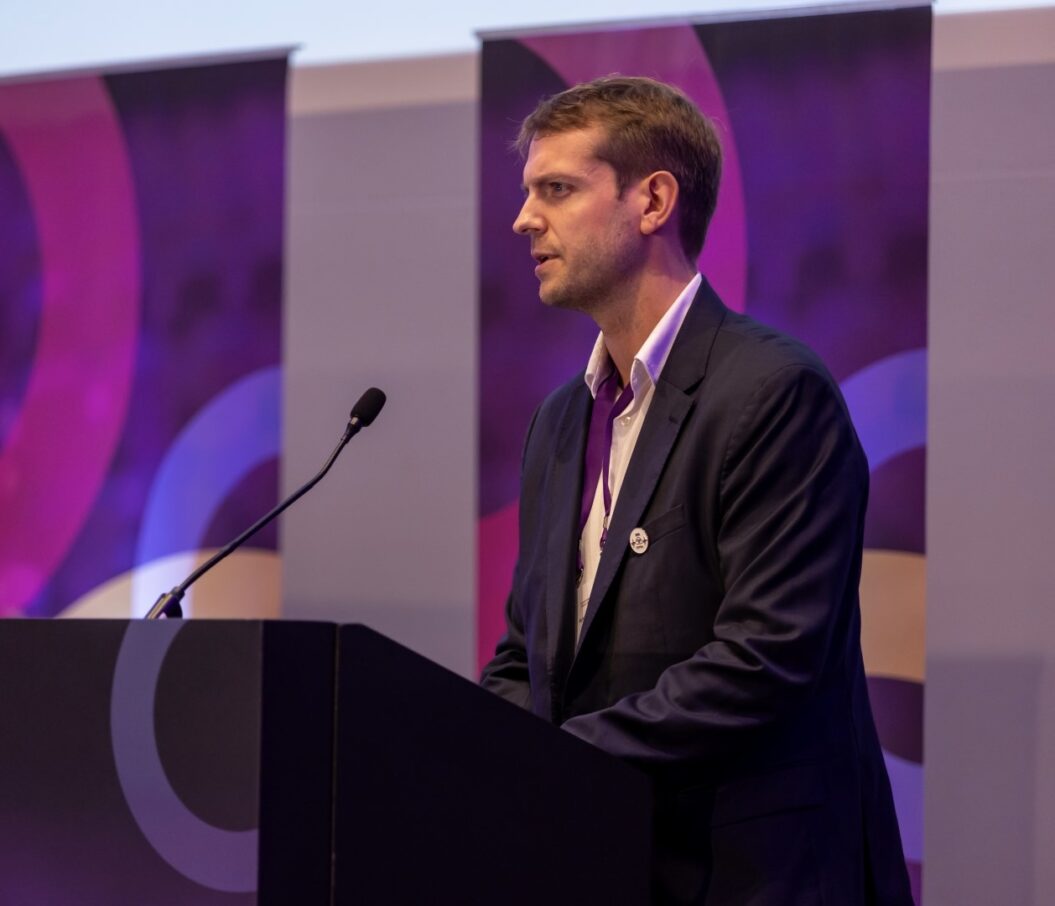
As part of the partnership between the Portuguese Diaspora Council and Jornal de Negócios, Artur Rebelo, a surgeon and Advanced Clinician Scientist at Universitätsklinikum Halle (Saale), affiliated with Martin Luther University Halle-Wittenberg, shared insights into his international career and his perspective on Portugal’s economic potential.
1 — What led you to leave Portugal?
The decision to leave arose from the desire to deepen training in oncological and vascular surgery, areas that, at the time, offered a more structured training path in the German academic system. Germany offers rigorous residency programs, with a high surgical volume and a strong connection between clinical and research, which allowed me to develop both surgical practice and a scientific path. It was also a way to test the ability to adapt to a different system, a new language and a demanding work culture, always maintaining a close connection to Portugal and the Portuguese diaspora community.
2 — What advantages or disadvantages did the fact that you are Portuguese bring you?
Being Portuguese has been, above all, an advantage. Basic medical training in Portugal is solid and well recognized in Europe, which facilitated integration into the German system. Communication skills, closeness in relationships with patients and colleagues, and the flexibility to work in multicultural teams are highly valued characteristics in Germany. Speaking several languages, including German, English and Portuguese, has opened doors to international collaborations, namely with networks such as IHPBA, E-AHPBA and ESSO. The main initial disadvantage was the language barrier and the process of recognition of titles, which requires time, patience and a lot of bureaucracy, but which, once overcome, ceases to be a relevant obstacle.
3 — What obstacles did you have to overcome and how did you do it?
The biggest obstacle was, without a doubt, the German language, essential not only to communicate with patients, but also to integrate surgical teams and participate in academic committees. I studied German intensively in the first years and tried to immerse myself in the clinical environment as much as possible. Another challenge was the recognition and validation of Portuguese medical qualifications, a long administrative process. Later, reconciling surgical care activity with clinical research and academic activity required rigorous time management and a lot of discipline. I overcame these obstacles with persistence, support from mentors in Germany and Portugal, and always maintaining clear medium and long-term goals, both clinical and scientific.
4 — What do you admire most about the country where you are?
I admire, first of all, the organization and meritocracy of the German health and academic system, which values continuous training, research and quality of care. The planning culture, investment in hospital infrastructure and institutional stability allow the development of long-term projects, such as multicenter clinical trials. I also admire the openness to international collaboration in German universities and the respect for work-life balance, despite the demands of surgery. I also value the way in which German society invests in the technical and scientific training of the new generations, creating a solid basis for innovation.
5 — What do you admire most about the company or organization where you are?
At the Universitätsklinikum Halle (Saale), linked to the Martin Luther University of Halle-Wittenberg, I admire the strong culture of complex oncological surgery, namely in hepatobiliopancreatic and oncovascular surgery, combined with a very active academic environment. There is a clear investment in the training of young surgeons and clinical scientists, with structured programs such as the Advanced Clinician Scientist, which allow combining highly differentiated surgical practice with translational research. The leadership of the department, under the direction of Prof. Dr. Jörg Kleeff, actively encourages international projects, clinical trials and multicenter collaborations, creating a stimulating environment for those who want to grow scientifically without abandoning the surgical component.
6 — What recommendations would you give to Portugal and its entrepreneurs and managers?
I would recommend greater investment in structured advanced training and clinical research programmes within hospitals, similar to the clinician scientist models that exist in Germany, which retain talent and generate innovation. For entrepreneurs and managers, it would underline the importance of looking at Germany not only as an export market, but as a partner for research and development, especially in areas such as medical devices, biotechnology and digital health. Internationalization needs continuity and networks of trust; the work of diaspora communities, such as the Portuguese Diaspora Council, can be a valuable bridge to identify concrete opportunities and facilitate institutional and business contacts. The creation of long-term strategic partnerships, and not just one-off ones, is essential for sustainable results.
7 — In which sectors of the country where you live could Portuguese companies find customers?
Germany has a growing demand in sectors where Portugal already demonstrates competence, such as health technologies, medical devices, hospital management software and digital health solutions. There are also opportunities in sustainable construction, renewable energies and components for the automotive industry, where Portuguese suppliers already have a presence. In the agri-food sector, quality Portuguese products continue to have a niche of German consumers interested in authentic Mediterranean products. Finally, medical and wellness tourism can also find German customers interested in quality services at competitive prices.
8 — In which sectors of Portugal could companies in the country where you live want to invest?
German companies could find interesting opportunities in Portugal in renewable energies, especially solar and green hydrogen, given the privileged geographical location. The private health sector and hospital infrastructure also have potential, as does the digitalisation of public and health services. The automotive and components industry, already with a relevant German presence in Portugal, can continue to expand. Finally, Portugal offers attractive conditions for research and development centres and international shared services, benefiting from qualified labour, competitive costs and high quality of life.
9 — What is the competitive advantage of the country in which you live that could be replicated in Portugal?
One of Germany’s greatest competitive advantages is the close integration between universities, hospitals and industry, which allows it to transform clinical research into applied innovation relatively quickly. Translational research funding programs, managed by public and private foundations, create an ecosystem where physicians can develop scientific careers without leaving clinical practice. Replicating this model in Portugal, with greater investment in clinician scientist programs, structured public-private partnerships, and competitive funding for clinical research, could help retain medical and scientific talent and increase innovation capacity in the health sector.
10 — Are you thinking of returning to Portugal? Why?
I maintain a very close connection to Portugal, both professionally, through scientific collaborations and work with the Portuguese Diaspora Council, as well as on a personal and family level. However, in the short and medium term, my professional project is consolidated in Germany, where I have large-scale clinical and scientific projects underway. I do not exclude, in the future, forms of closer collaboration with Portuguese institutions, whether through joint research projects, teaching or consultancy, contributing to the development of academic surgery in Portugal without necessarily implying a definitive return in the short term.