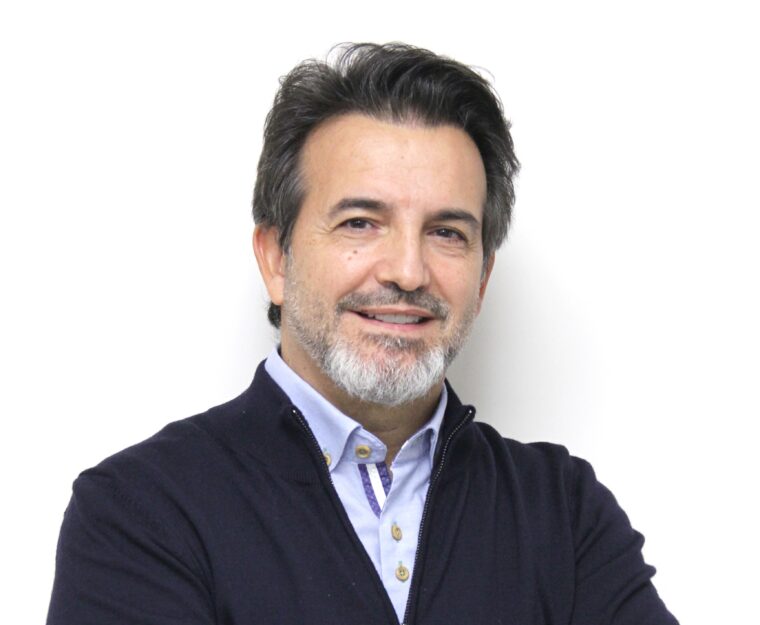
As part of the partnership between the Portuguese Diaspora Council and Jornal de Negócios, Paulo Paiva dos Santos, Founder and CEO of INVENTIS and QANTARIS, and President of the Portuguese Business Council in Dubai, shared insights into his international professional journey and his perspective on Portugal’s economic potential.
1 — What led you to leave Portugal?
After more than two decades building Generis, from the first day in 2002 to becoming the largest generic company in Portugal, with three manufacturing units between Portugal and Spain and a portfolio of more than 500 products, the natural time has come to look for a new challenge after the sale to the Aurobindo group. I don’t feel that I have “left” Portugal, I feel that I have expanded the range of action. Dubai emerged as a natural gateway to the markets of the Gulf, Africa and Asia, regions with enormous demand for pharmaceutical industrial capacity and European regulatory know-how, exactly the competence I have built throughout a professional life dedicated to the sector. Today I run INVENTIS and QANTARIS, with dual headquarters in Lisbon and Dubai, and I live between the two geographies regularly, which I consider more of a natural extension of the path than a break with everything I started building in Portugal more than thirty years ago.
2 — What advantages or disadvantages did the fact that you are Portuguese bring you?
The biggest advantage is European regulatory credibility: coming from a country with a recognized tradition in pharmaceutical quality and in the EMA framework opens immediate doors in markets that seek exactly that seal of trust, especially in the Gulf, where pharmaceutical sovereignty is now a state priority. The Portuguese ability to build close, patient and lasting relationships is also an asset in business in this region, where personal trust weighs as much, or more, than the contract itself. As a disadvantage, Portugal still does not have a country brand as recognized in the Gulf as other European nations with a stronger historical presence, so it is necessary to build reputation on a case-by-case, project-by-project basis, without the institutional shortcut that other flags already automatically offer to their companies.
3 — What obstacles did you have to overcome and how did you do it?
The biggest obstacle was always regulatory and scale: building Generis from scratch, in a market dominated by multinationals installed for decades, required continuous investment in quality and compliance, long before there was a volume of sales that justified it financially. In Dubai, the challenge was reversed: to learn again, after thirty years of career, completely different regulatory frameworks, such as the MOHAP in the Emirates or the SFDA in Saudi Arabia, after a life accustomed to European logic. I overcame both challenges with the same method as always: investing first in the quality structure and technical credibility, only then in the commercial aspect, and surrounding myself with local partners who know the terrain and the regulators better than any market study could anticipate.
4 — What do you admire most about the country where you are?
The vision of His Highness Sheikh Mohammed bin Rashid Al Maktoum, Vice President of the United Arab Emirates and Ruler of Dubai, and His Highness Sheikh Mohamed bin Zayed Al Nahyan, President of the United Arab Emirates, and the resilience that both have been able to imprint on the country, are perhaps what impresses me the most. From this vision is then born the speed of execution that is felt on a daily basis: the Emirates decide and implement in months what in other geographies, including Europe, takes years to get off the ground. There is a very long-term horizon, such as Dubai Economic Agenda D33 or Oman’s Vision 2040, combined with a very short-term execution capacity, without the bureaucratic paralysis that so often holds back good projects elsewhere. I also admire the genuine openness to foreign talent: you arrive here without a historical network of contacts and, if the work and credibility are consistent, the doors open with a speed that I have rarely found in other geographies where I have also worked throughout my career.
5 — What do you admire most about the company or organization where you are?
Our adaptation to this vision, and the way we manage to align the industrial operator culture of INVENTIS and QANTARIS with the country’s ambition, is what I value most on a daily basis. We keep decisions made thinking like manufacturers and not committees, with the same discipline that I learned to build since the early days of Generis. As President of the Portuguese Business Council Dubai, I also admire the way in which an essentially voluntary network has been structured to do serious economic diplomacy, organizing initiatives such as the celebration of the Day of Portugal, with delegation of economic diplomacy powers by the Ambassador of Portugal himself, proof that the organized diaspora can have real institutional weight, and not just symbolic.
6 — What recommendations would you give to Portugal and its entrepreneurs and managers?
Portugal should use European regulatory credibility as a passport, not as a final destination. There is an excessive and understandable focus on Spain, France and Portuguese-speaking countries, and still little direct and sustained investment in markets such as the Gulf, where the demand for reliable European partners is enormous and Portuguese competition remains scarce compared to other European countries already present. I would recommend speed and decision-making power to move forward, a direct and continued presence on the ground, less dependence on intermediaries and distributors, and more ambition to lead industrial projects outside Europe, not just to export them at a distance. Experience shows that those who arrive first, decide quickly and act with technical seriousness are, naturally, in the best negotiating position.
7 — In which sectors of the country where you live could Portuguese companies find customers?
Pharmaceutical industry and CDMO services are clearly in growing demand in the Gulf, as countries such as Oman, Saudi Arabia and the UAE itself move forward with their strategies for pharmaceutical sovereignty and reducing dependence on critical imports. In addition to health, I see concrete opportunities in agri-food, renewable energy, construction and materials, and in tourism and hospitality know-how, areas where Portugal has internationally recognized competence and where the Gulf continues, year after year, to import technical knowledge and reliable long-term partners.
8 — In which sectors of Portugal could companies in the country where you live want to invest?
I see clear potential in real estate, renewable energies and pharmaceutical industrial capacity, where Portugal offers a strategic location facing the Atlantic and European regulatory know-how at costs that are still very competitive compared to other geographies in the European Union. Logistics and ports, given Portugal’s position as an Atlantic gateway to Europe, and agriculture and agri-food, are also sectors that arouse growing interest from Gulf capital looking for diversification outside the region and stable European assets, with predictable returns and a solid legal framework.
9 — What is the competitive advantage of the country in which you live that could be replicated in Portugal?
The ability to plan very long-term strategic planning, combined with very short-term execution. The Emirates and Oman define twenty-year visions, such as Vision 2040 itself, and then translate them into concrete administrative decisions that move forward in weeks, not years, with clear objectives and indicators for each ministry and agency involved. This close coordination between the State and the private sector, with a real capacity to simplify processes for those who decide to invest and create jobs, is something that Portugal could replicate without losing its own identity, just with more discipline and speed of execution in the decisions already taken.
10 — Are you thinking of returning to Portugal? Why?
I don’t think of my path in terms of leaving or coming back. I divide my time between Portugal and the Emirates regularly, on monthly trips. I see my role as that of a bridge (Qantaris in Arabic means bridge): to bring industrial capacity and Portuguese credibility to the Gulf, and to bring back to Portugal investment opportunities , partnerships and international visibility for the Portuguese professionals who work here. I will progressively spend more time in Portugal in the coming years, as projects in the Gulf reach operational maturity and require less direct presence on the ground on a day-to-day basis.