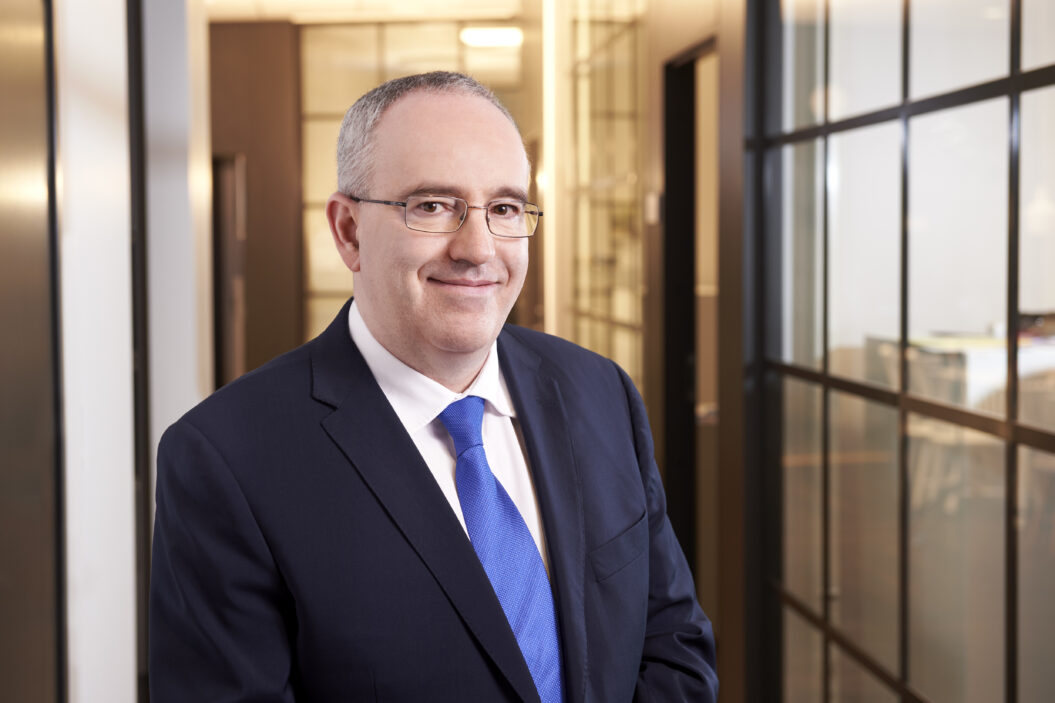
As part of the partnership between the Portuguese Diaspora Council and Jornal de Negócios, Fernando Macário, Group Chief Medical Officer at M42 Health, shared insights into his professional journey in the United Arab Emirates and his perspective on Portugal’s potential to compete through quality and excellence.
1 — What led you to leave Portugal?
I left Portugal out of professional ambition, intellectual curiosity and the desire to grow in more demanding contexts. In health, and in particular in the area of clinical governance, international experience allows us to compare models, learn from different systems and gain scale of impact. I never saw this departure as a break with the country, but as a natural extension of my path — built over three decades, between the University Hospital of Coimbra, the global clinical leadership at Diaverum and, since 2025, M42 in Abu Dhabi. I took with me the training, values and adaptability that I acquired in Portugal, and tried to apply them in more complex organizations. Working outside the home has also given me the possibility to think about health from another latitude: less closed on the local context and more oriented towards standards, results and continuous learning.
2 — What advantages or disadvantages did the fact that you are Portuguese bring you?
Being Portuguese brought important advantages: adaptability, relational proximity, practical sense and openness to different cultures. In international environments, this goes a long way toward building trust and building bridges between people and institutions. I also believe that the Portuguese tend to combine resilience with discretion, which can be a strength in leadership roles. Portuguese medical and scientific training is solid — in my case, supported by decades of teaching at the Faculty of Medicine of Coimbra, collaboration with the DGS and IPST, regular presence in clinical trials and international congresses, and ten years as a jury member of the European Board of Transplantation Medicine. I was President of the Portuguese Society of Transplantation for two terms and I am now an honorary member. The main disadvantage is that Portugal continues to have limited visibility in some geographies and sectors, which requires demonstrating value more quickly. But it also forces us to arrive better prepared — and in my case, I always tried to turn that lower visibility into an opportunity to score for substance, seriousness and consistency.
3 — What obstacles did you have to overcome and how did you do it?
The main obstacle was to assert credibility in highly competitive, multicultural and demanding environments. Working outside requires more than technical competence: it requires understanding contexts, adapting communication, and building legitimacy with consistency. In health, this requirement is even greater, as decisions have a direct impact on the lives of patients and on the ethical responsibility of institutions. I tried to overcome these challenges with serious work, preparation, listening, and coherence — and with investment in executive training, namely in the leadership program at Harvard Business School. Experience has taught me that credibility is not proclaimed; It is built with sound decisions, a sense of responsibility and clarity of purpose. I learned that leading in health care involves integrating clinical, strategy, and innovation—not as separate functions, but as parts of the same responsibility. Another challenge was to balance demand and humanity, because leading well, especially in health, implies combining technical rigor with respect for people.
4 — What do you admire most about the country where you are?
What I admire most about the UAE is the strategic ambition with which the country thinks about the future. There is an unusual ability to set priorities, mobilize resources, and execute quickly. This is visible in health, innovation, infrastructure, and attracting international talent. I admire the confidence in the possibility of building and transforming. It is a young country, but with great clarity about what it wants to be. For those who work in areas that require change, such as healthcare, this environment is particularly stimulating. There is also a culture of openness to the world that allows bringing together highly qualified people, from different backgrounds, around projects with real scale and purpose.
5 — What do you admire most about the company or organization where you are?
What I admire most about M42 is the ambition to build a health system that is more integrated, smarter and more oriented towards relevant clinical outcomes. It is not just about managing health units, but about articulating care provision, technology, data analysis, innovation and clinical governance in a coherent way. When I arrived, there was no Corporate Medical Office function structured at a global level — we have been building it with that vision, in a network covering 27 countries. In a sector that is so often fragmented, this coherence has enormous value. It is very stimulating to work in an organization that seeks to connect clinical excellence, quality, patient safety and artificial intelligence applied to the improvement of care. I admire, above all, the possibility of thinking of health not only as a response to disease, but as an evolving system, more precise, more measurable and potentially more human.
6 — What recommendations would you give to Portugal and its entrepreneurs and managers?
Portugal has talent, competence and entrepreneurial capacity. What is sometimes lacking is greater scale of ambition, more speed of execution, and greater tolerance for intelligent risk. My main recommendation is to think internationally from the beginning, not as a complement, but as part of the strategy. The diaspora — doctors, engineers, managers, researchers around the world — can be an active bridge in this process, not just a statistic. The Portuguese Diaspora Council exists precisely for this. To entrepreneurs and managers, I would also say that investing in leadership, governance, innovation and human capital is not optional; it is a condition of competitiveness. Portugal also needs a more demanding culture in execution: less dispersion, more focus and greater ability to transform good ideas into concrete results. I would also add the importance of valuing differentiation, quality and reputation more, rather than competing only on price or size.
7 — In which sectors of the country where you live could Portuguese companies find customers?
In the UAE there are relevant opportunities for Portuguese companies in health, technology, engineering, specialized construction, energy, tourism, education and qualified professional services. It is a demanding and selective market, but it values competence, reliability and delivery capacity. In healthcare, in particular, there is room for solutions in specialized clinical services, digital health, medical devices, training and consulting. Portugal can assert itself well in niches where quality, credibility and flexibility count more than scale. To be successful, however, it is not enough to enter the market: it is necessary to be present, prepared, culturally understood, and committed to the medium and long term.
8 — In which sectors of Portugal could companies in the country where you live want to invest?
Emirati companies can find interesting opportunities in Portugal in health, tourism, qualified real estate, energy — namely renewables, where Portugal has a reference position —, technology, biotechnology, value-added agriculture and innovation linked to universities and scientific centers. Portugal offers stability, qualified talent, good quality of life and a relevant geographical position. Portugal can be attractive not only as a market, but also as a platform for development, innovation and the provision of specialized services. If you can present projects with scale, predictability and good execution, you can capture more strategic and longer-lasting investment.
9 — What is the competitive advantage of the country in which you live that could be replicated in Portugal?
One of the Emirates’ most outstanding competitive advantages is the ability to align strategic vision and execution quickly. There is a culture of decision oriented towards clear priorities, accountability and focus on results. Portugal would benefit from greater agility, less administrative friction and better articulation between strategy and implementation. It is not a matter of copying models, because the contexts are different, but of replicating an attitude: defining priorities, executing with discipline and reducing the distance between intention and consequence. In sectors such as health, this could have a particularly positive effect, because talent often exists, but strength is lost in the slowness of processes and institutional fragmentation.
10 — Are you thinking of returning to Portugal? Why?
Portugal is my country and that connection never disappears. From a personal, affective and identity point of view, the relationship remains intact. Going back is always a possibility, because the roots are not erased. That said, today the most important question for me is to understand where I can be most useful and create more value. I maintain active links with the Portuguese medical and scientific communities and involvement with the Portuguese Diaspora Council is a concrete way of doing so. The world has become more interconnected, and serving Portugal can also involve representing the country well abroad, building bridges, opening opportunities and bringing knowledge. If in the future there is a context in which returning makes personal and professional sense, I will naturally consider that hypothesis. But regardless of geography, it is essential to maintain an active connection to the country and contribute to Portugal being more ambitious, more demanding and more present in the world.