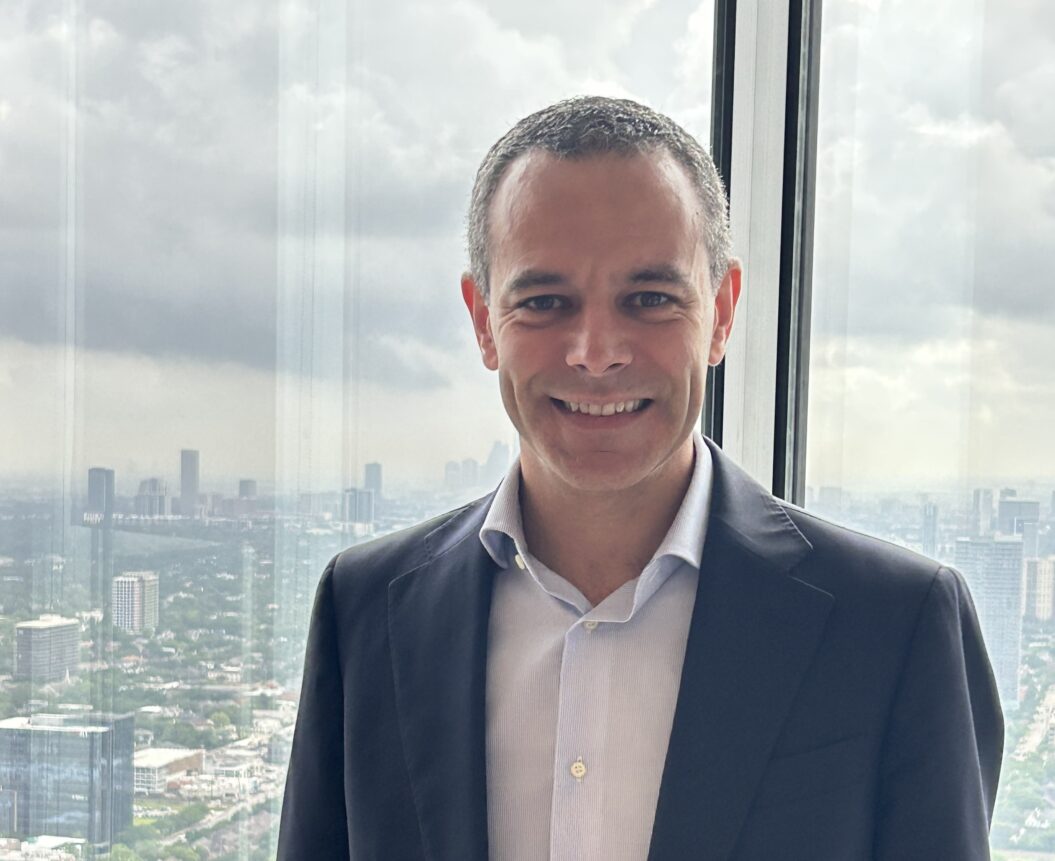
As part of the partnership between the Portuguese Diaspora Council and Jornal de Negócios, Francisco Morgadinho, Vice President Finance & Strategy at Advanced Polymer Solutions, LyondellBasell, shares insights into his professional experience in the United States and his conviction that leaving Portugal can be an investment in personal and professional growth without losing the ambition to give back to the country through new opportunities.
1 — What led you to leave Portugal?
My first departure from Portugal was through the Erasmus program, at the University of Rotterdam, which gave me, for the first time, the perspective of an international context. That experience marked me deeply — both for the contact with different cultures and for the possibility of taking the Portuguese perspective to international classrooms.
After returning, I made it a priority to develop my career in a demanding international environment, where I could learn, accelerate professional development, grow and create impact. At the age of 22, I was recruited by General Electric (GE), starting a career in various financial and strategic functions in the areas of energy, chemical, petroleum and corporate functions, giving me the opportunity to live in ten countries: United States, Netherlands, Germany, Italy, Spain, England, Ireland, Scotland, Angola and Brazil. In addition to GE, I have had very special professional and personal experiences in other companies (Baker Hughes and LyondellBasell), very demanding and fundamental to develop leadership, financial discipline and strategic execution.
2 — What advantages or disadvantages did the fact that you are Portuguese bring you?
Being Portuguese has been above all a competitive advantage. The Portuguese are distinguished by their ability to adapt, good relationships with teams and leaders, intercultural empathy, resilience and a strong sense of commitment. We are recognized as solutions-oriented professionals, with ease in creating relationships of trust and with a high degree of commitment to achieve the goals of companies.
The main limitation is not in talent, but in the way Portugal positions itself globally. I think it is critical to communicate and share the value that the Portuguese and Portuguese Companies can bring to various industries and global companies. Merit exists and is recognized, but it is not always communicated with sufficient ambition.
3 — What obstacles did you have to overcome and how did you do it?
The biggest challenge was starting in several very different cultural and organizational contexts and having to quickly learn and develop global experience in very important industries. Cultural adaptation proved to be very important to create relationships with leaders and colleagues who have a lot of experience and was fundamental to develop technical competence. Leading multicultural teams, dealing with different decision-making processes, and working in complex organizations required active listening, analytical discipline, and mentor support. The continuous focus on learning, intellectual curiosity, and consistent execution were essential to turning these challenges into professional growth.
4 — What do you admire most about the country where you are?
In the United States, I admire the agility, the ability to execute and the growth-oriented mentality of companies, particularly in financial terms. It is a market where “experimenting, identifying opportunities, and how to move forward” is part of the culture, and customer value and innovation continue to be priorities for growth. The North American ecosystem stands out for its institutional efficiency, risk tolerance, and strong integration between companies, consultants, and academia. But to achieve results, it is essential to develop organizations, develop professional opportunities and value the merit of workers. These elements allow leaders and organizations to set goals, make decisions, and implement strategies on a large scale to grow above the market. And this is also fundamental for public investments in the NYSE and NASDAQ Exchanges.
5 — What do you admire most about the company or organization where you are?
LyondellBasell focuses on market dynamics and this determines the ability to transform strategy into concrete results. The focus is on identifying growth opportunities to grow financially. This approach has allowed us to lead transformation processes, generate sustainable value for customers and shareholders and explore opportunities for innovation, process automation and Artificial Intelligence that increase operational efficiency.
To achieve these goals, the company fosters a culture of growth, and this creates many opportunities for the development of the company’s professional resources. As the company is global and has products and applications in many industries – Automotive, Consumer Goods, Electronics, Healthcare, Building and Construction – it develops effective transformation with several companies in all countries and industries, which helps us to grow professionally in a very significant way.
6 — What recommendations would you give to Portugal and its entrepreneurs and managers?
The main recommendation is to invest more in people and execution. Less bureaucracy, more predictability, and a greater focus on execution are key. Equally important is the proximity of leaders to their teams. Continuing to develop professional resources, and giving them growth opportunities in our Portuguese companies, will continue to accelerate growth.
Companies need to clearly align goals, priorities, and talent development. People are the main driver of growth — and many organizations still underestimate this fact. Developing global experience should also be an opportunity to continue to grow Portuguese companies that have solutions with a lot of value for various industries.
7 — In which sectors of the country where you live could Portuguese companies find customers?
In the United States there are clear opportunities for Portuguese companies in the areas of technology, renewable energy, sustainability, engineering, textile and agri-food industries and specialized services.
Something that makes a lot of difference in creating opportunities is the ability to give visibility and communicate value, experience, and differentiation. American companies are looking for global growth, and it is essential to give visibility to the added value of Portuguese companies in accelerating growth, something that can bring important opportunities for our companies.
8 — In which sectors of Portugal could companies in the country where you live want to invest?
Portugal is particularly attractive for investments in energy, technology, artificial intelligence and health. The country also has a lot of talent and competitive cost, which gives global companies the opportunity to have central services in countries like Portugal.
In addition, Portugal has a geographical position and a very effective connection with many other countries (e.g. European Union, Angola, Brazil), and this can give the opportunity to global American companies to reach other countries more quickly.
9 — What is the competitive advantage of the country in which you live that could be replicated in Portugal?
The U.S.’s greatest competitive advantage is the global centralization of multiple industries, which brings leadership and accumulated experience to professionals and investments and sets priorities to accelerate growth. Investing to improve efficiency, reduce costs and increase value is essential to make the right decisions, define priorities and execute actions to promote the growth of companies.
Portugal can replicate these elements, while also benefiting from more competitive costs, becoming a strategic hub for global operations.
10 — Are you thinking of returning to Portugal? Why?
Professionally, being able to take the acquired professional experience and global leadership that I had in several multinational companies and in several countries, I think I could bring value to Portuguese or multinational companies that could develop more presence in Portugal. Personally, Portugal is my country of origin and with which I identify culturally and emotionally. Sharing with the Portuguese Diaspora is a strategic asset and I hope to continue to develop opportunities for our country.