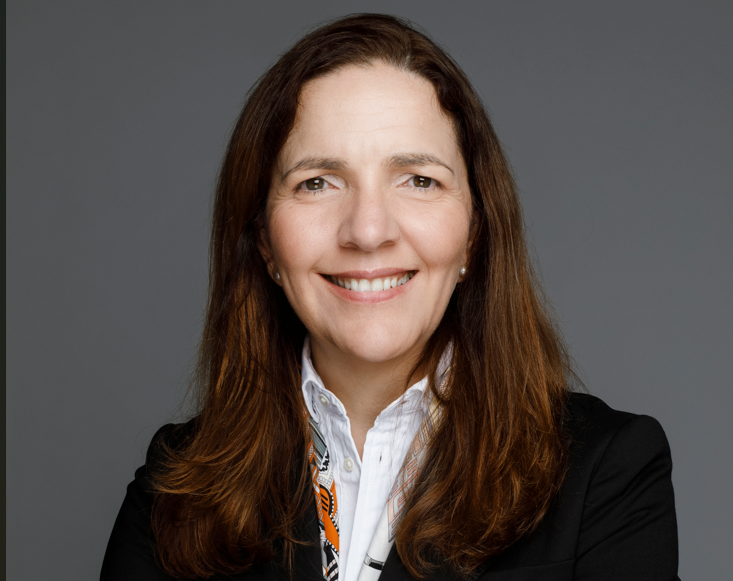
As part of the partnership between the Portuguese Diaspora Council and Jornal de Negócios, Manuela Abreu, Managing Director at OnBoard Advisory and Non-Executive Director of investment funds in Luxembourg and operating companies in Portugal, shares insights into her international career journey and her perspective on Portugal’s economic potential.
1 — What led you to leave Portugal?
From an early age, I knew that I wanted to work across borders — with other nationalities, in other languages, in professional environments different from the one I knew. It wasn’t an escape from Portugal, it was an attraction around the world. There was a genuine curiosity about other ways of working, thinking and solving problems in me, and I realized that this curiosity could only be satisfied by leaving Portugal. Luxembourg gave me exactly that: a truly international, demanding and stimulating environment, where I grew both as a professional and as a person.
2 — What advantages or disadvantages did the fact that you are Portuguese bring you?
Always advantages. Being Portuguese taught me the value of work and resilience — we grew up used to doing more with less. This gave me a natural ability to adapt to different cultures and ways of working, which in the international context is a huge asset. And perhaps most importantly, it developed in me a genuine sensitivity to difference—to realize that there is always more than one valid way of doing things.
3 — What obstacles did you have to overcome and how did you do it?
With work, dedication and a lot of resilience — one day at a time. It is not easy to break the glass ceiling, nor to deconstruct stereotypes, especially when you are a woman, Portuguese, in an industry dominated by other profiles. But I learned that the best answer to those who doubt is consistency: show up every day, deliver results and not ask permission to occupy the space.
4 — What do you admire most about the country where you are?
Luxembourg is a country that lives European values not as rhetoric but as everyday practice. It’s a genuinely multicultural society — about half of the population is foreign — where diversity isn’t a slogan, it’s simply the everyday reality. This creates an environment of openness and tolerance where extremist views have very little room to grow. And then there is a maturity in the way the country thinks about the future: with a long-term, stable and consistent vision, which inspires confidence — both in those who live there and in those who invest.
5 — What do you admire most about the company or organization where you are?
As a non-executive director, my ‘clients’ are large companies in the financial sector — investment fund managers and operating companies with a truly international expression. It’s a demanding universe, and that’s precisely what inspires me.
What I admire most about those who work in this industry—my clients and my fellow board members—is the combination of three things that rarely go together on the same level: absolute professionalism, in-depth knowledge of the industry, and an impeccable work ethic. To all this is added something that, coming from such different contexts, touches me in a special way: a genuine respect for other cultures and ways of thinking. In an increasingly fragmented world, this respect is not a detail, it is a competitive advantage.
6 — What recommendations would you give to Portugal and its entrepreneurs and managers?
My main recommendation is: be brave. Take more risks, innovate consistently and, above all, change the relationship you have with failure — failure is not the opposite of success, it is part of the path. The fastest growing economies are those that have normalized error as learning.
Also believe more in yourself and in your companies. Portugal has talent, it has the capacity to work and it has an international projection that we often underestimate. The world knows us better than we know ourselves.
And finally: let your dreams be bigger than the Portuguese borders. The Portuguese market is a starting point, not a limit.
7 — In which sectors of the country where you live could Portuguese companies find customers?
Luxembourg is the second investment fund platform in the world, only behind the United States, and this creates real opportunities for Portuguese companies. In the financial area, there is a very receptive and demanding market for consulting, auditing and compliance services — and especially for Fintech companies, in the areas of digital payments, blockchain and investment platforms. It is an ecosystem that values innovation and rigor simultaneously, and Portuguese companies have the capacity to respond to this profile.
But it’s not just in finance. The Luxembourg-Portugal Business Forum has identified Sustainable Construction as one of the three major areas of bilateral opportunity — and this encompasses architecture, engineering, construction and materials. Luxembourg has very serious ambitions in terms of sustainability and is willing to pay for quality. It is a window of opportunity that Portuguese companies in the sector should not ignore.
8 — In which sectors of Portugal could companies in the country where you live want to invest?
Portugal offers Luxembourg companies a truly fertile ground — and in very diverse sectors. In technology, there are real opportunities in software and IT services, in a market with qualified talent and competitive costs. And in the areas of health and sustainability — health technologies, renewable energy and sustainable construction — the country is growing with consistency and ambition.
Tourism and real estate continue to be natural destinations for foreign investment, with demand showing no signs of slowing down. But perhaps the most differentiating argument is another: Portugal has a booming start-up ecosystem and a unique strategic position as a gateway to Portuguese-speaking markets — a universe of more than 250 million people.
It is this set of factors that, in my view, makes Portugal one of the most attractive bets in Europe for foreign investment.
9 — What is the competitive advantage of the country in which you live that could be replicated in Portugal?
Luxembourg’s main competitive advantage that Portugal could — and should — replicate is predictability. Luxembourg has built an international reputation over decades based on clear, consistent and long-lasting rules, a highly professionalised public administration and an ongoing dialogue between the regulator, the government and the private sector. The result is an environment where investors know what to expect—and that, for long-term investing, is as true as any tax incentive.
Portugal has the ingredients. What is sometimes lacking is the consistency of public institutions. A more pragmatic, more partnering and more responsive regulatory environment — like what Luxembourg has built in the financial sector, pioneering the implementation of European regulations always in the most investment-friendly way — would be transformative for our economy.
But there is an advantage that Portugal has and Luxembourg will never have: geography and history. Portugal occupies a unique position — based on the European continent, bathed by the Atlantic, facing the Americas (South and North) to the west and Africa to the south. It’s not just a matter of location on the map. It is a historical, cultural and linguistic relationship with these continents that took centuries to build and that no other European country can replicate. This is perhaps the most genuine and inimitable competitive advantage that Portugal has – and which is still far from being fully exploited.
10 — Are you thinking of returning to Portugal? Why?
“Every day” is the answer I give whenever I am asked this question. Portugal is my “heart”, Luxembourg is my “head”. And for now, I need both.
I know that my path in Luxembourg is far from over. But I feel, more and more, a desire to get closer to Portugal — not only emotionally, but professionally. I want to work more with Portuguese companies and projects, contribute with what I have learned and with the network I have built, because I genuinely believe that I have something to give to my country.
The return is not a matter of ‘if’ — it is a matter of ‘when’.