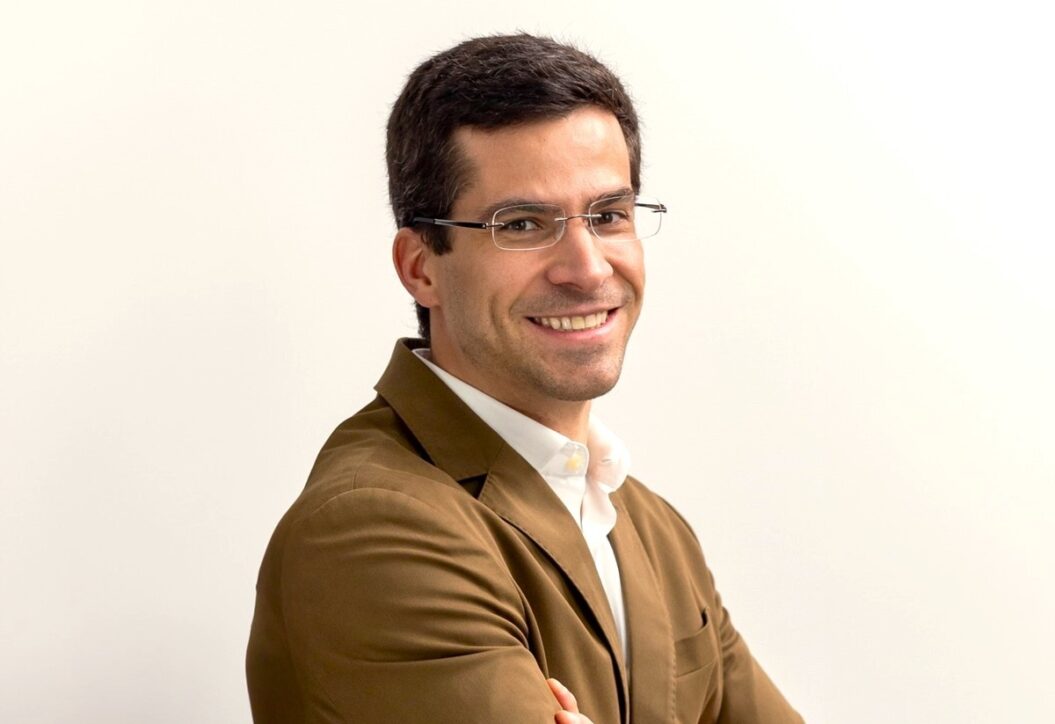
As part of the partnership between the Portuguese Diaspora Council and Jornal de Negócios, André Pereira da Silva, Managing Director at Shell Brasil, shares insights into his international journey and his perspective on Portugal’s economic potential.
1 — What led you to leave Portugal?
The decision resulted from a combination of professional and personal factors. After about 10 years in energy, banking and consulting (Galp, Banco de Portugal, KPMG and EDP), I looked for a context of greater scale and complexity to continue to evolve. Brazil, and in particular Shell, offer a more dynamic market with greater exposure to strategic decisions with real impact, providing a faster learning curve and greater capacity for value creation. It is also a strategic career decision, reinforcing future options through experience in a large-scale emerging market.
Finally, there was a relevant personal dimension: the opportunity to provide my family with an international experience in Brazil, in particular in Rio de Janeiro.
2 — What advantages or disadvantages did the fact that you are Portuguese bring you?
The linguistic and cultural proximity allows for quick and effective integration in a country that, despite having increasingly qualified staff, is still open to equally qualified profiles from abroad. The disadvantage, if I can call it that, is that at the beginning there is always a “trial period” where you need to quickly demonstrate credibility and deliver balanced results with the right dose of confidence and humility.
3 — What obstacles did you have to overcome and how did you do it?
On a personal level, the main challenge was to build a new family base in an international context, without the proximity of the support network of family and friends. It required my wife and me to have a great capacity for adaptation to create new routines, ensure stability and build a new balance, which we ended up doing through discipline, planning and a strong complementarity between them. On the professional level, the biggest challenge was communication. Despite the common language, adapting to the local context – namely, accent, rhythm and dynamics of the interlocutors – required a conscious effort to ensure clarity, assertiveness and consistency of the message in different contexts. Over time, I adjusted the communication style, making it more direct and adapted.
4 — What do you admire most about the country where you are?
I admire, above all, Brazil’s capacity for execution and resilience. It is a country with a high degree of complexity, whether at the logistical, regulatory or structural level. Still, it is characterized by a strong ability to adapt and deliver, often through creative and pragmatic solutions.
I also value the human dimension: openness, ease of establishing relationships and predisposition to collaborate, which end up being critical factors in solving problems and accelerating projects.
In the energy sector, I also highlight the country’s enormous potential, both in oil and gas (due to the technical sophistication of offshore operations), and in the abundance of energy resources, where there is a clear opportunity for innovation, growth and global positioning.
5 — What do you admire most about the company or organization where you are?
I admire, above all, the strong safety culture and the continuous ambition to deliver excellent results, based on a solid cultural foundation, even in contexts of high complexity and change. In a global group such as Shell, the combination of performance requirements and technical quality stands out, with a focus on decision and execution discipline. At the same time, a culture that values diversity of perspectives, collaboration and continuous learning. There is a clear balance between “what we deliver” and “how we deliver“, which translates into a true culture of responsibility and integrity. Personally, I also value the focus on talent development, with a consistent commitment to empowering people, promoting inclusive leadership and creating conditions for each one to reach their potential.
6 — What recommendations would you give to Portugal and its entrepreneurs and managers?
Portugal has very solid conditions (stability, talent and access to markets), but it continues to face structural challenges in terms of scale, productivity and competitiveness. These are complex issues that can be resolved gradually, but the path passes, in my perspective, through four fundamental axes: (1) Define clear strategic priorities and strengthen public-private collaboration, aligning incentives, capital and talent; (2) Promote business scale, creating companies with the size and ambition to compete in global markets; (3) Transform innovation into economic value, ensuring that knowledge and technology generate real impact on the business fabric; (4) Reduce friction and bureaucracy by simplifying processes and speeding up decision-making in public bodies.
7 — In which sectors of the country where you live could Portuguese companies find customers?
Portuguese companies find opportunities in Brazil, depending on their scale, capabilities and competitive positioning. Multinationals operate in structural and foreign-capital-intensive sectors, which allows them to capture value at scale (e.g., in energy and infrastructure). Success in these segments is based on financial capacity, technology and sustained long-term presence. Small and Medium Enterprises (SMEs) focus on niches and differentiation, with emphasis on agri-food (e.g., Portuguese wine and olive oil producers and brands) and trade-related services. They compete mainly for quality, brand and specialization, in a large but highly competitive market.
8 — In which sectors of Portugal could companies in the country where you live want to invest?
Brazil sees Portugal as a strategic platform for entry into Europe, supported by institutional stability, access to the European market and use of the euro, reducing exchange rate risk and increasing predictability. In this context, models based on differentiation, digital scale and operational efficiency stand out: (1) Fintechs (e.g. Nubank, PagSeguro, PicPay), with a proven ability to scale services with technology, low cost and strong customer focus; (2) High-maturity digital technology and services in data-driven models and flexible platforms, replicable in more advanced markets; (3) Healthtech / private health, with evolution to integrated digital models, with telemedicine and intensive use of data, improving access, efficiency and quality.
9 — What is the competitive advantage of the country in which you live that could be replicated in Portugal?
Brazil’s competitive advantage lies in scale combined with agility: a large market that allows testing and scaling solutions, and a business culture that favors speed of decision, adaptation, and experimentation. Portugal will hardly replicate the scale, but it can capture value by adapting this model: (1) Create export-oriented ecosystems (e.g. technology hubs and service centers); (2) Reduce administrative friction and speed up decisions; and (3) Strengthen public-private collaboration with clear objectives.
10 — Are you thinking of returning to Portugal? Why?
In the short/medium term, I do not foresee returning to Portugal, especially because Brazil is now our home. It was here that our daughters were born/grew up, and where I am inserted in a highly stimulating professional context. I maintain, however, this possibility open for family and life cycle reasons. If and when I return, I would like it to be for a project with strategic relevance, which will allow us to continue to create value in the areas of energy, investment or business development.