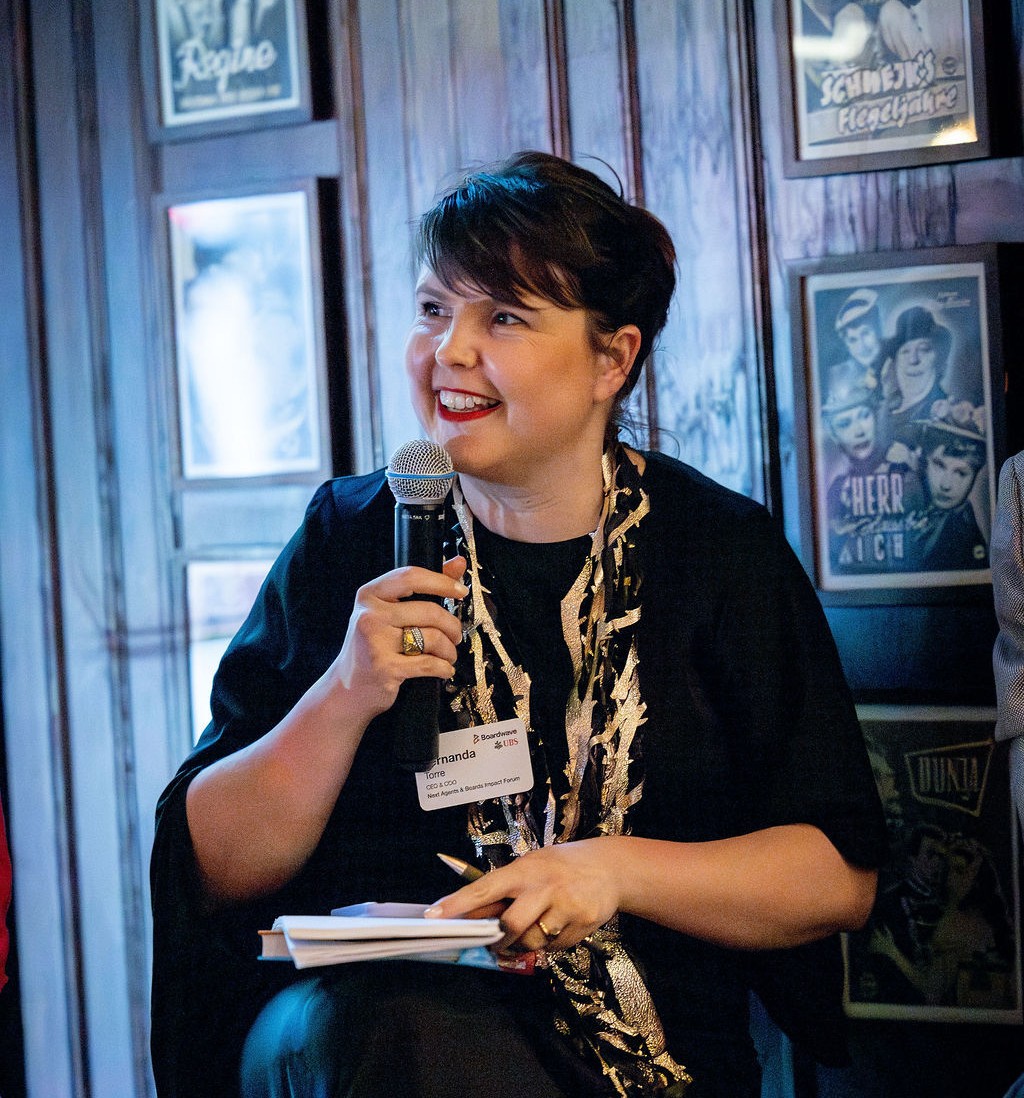
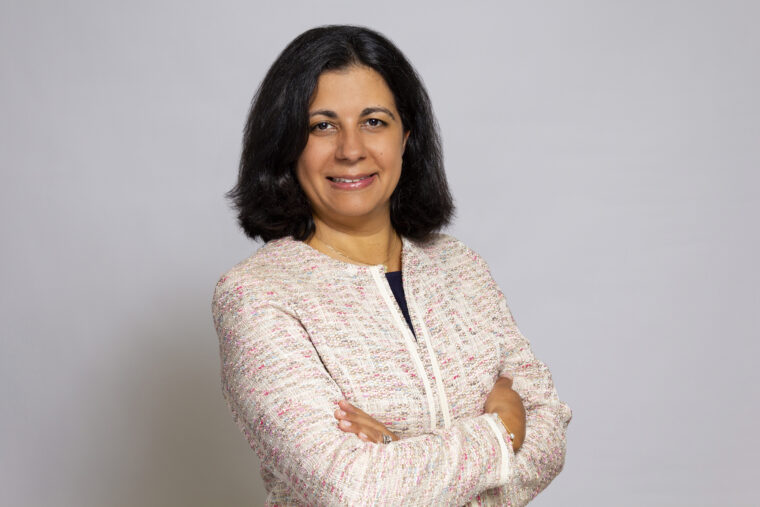
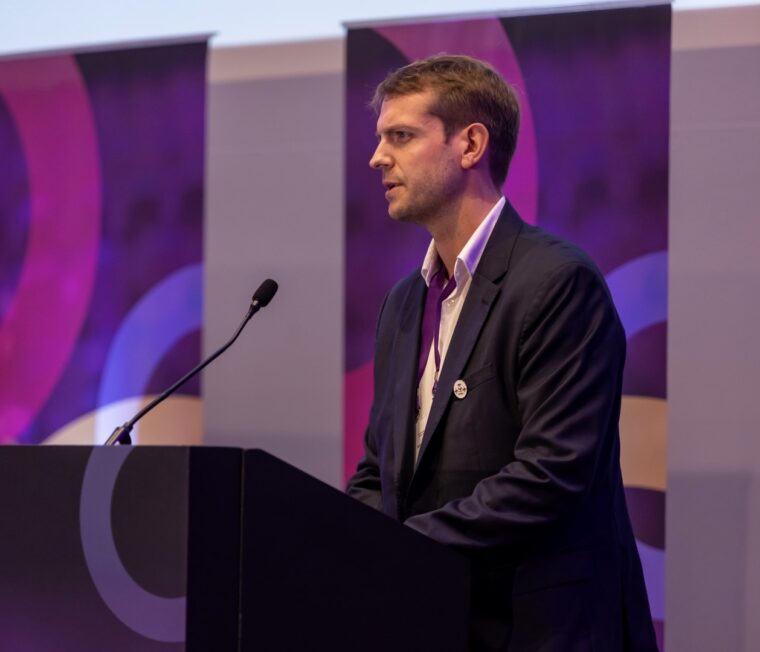
As part of the partnership between the Portuguese Diaspora Council and Jornal de Negócios, Fernanda Torre, CEO at Next Agents and COO and Co-Founder of Boards Impact Forum, shares insights into her personal and professional journey in Sweden, as well as her reflections on Portugal’s economic potential.
1 — What led you to leave Portugal?
Throughout my life, I notice a pattern in me: I have always chosen the most difficult path, the least obvious path, the unclear alternative. Staying in Portugal would have been the safe option, and I constantly need to test myself and understand my limits. I identify myself by my contours, by my edges, and that’s why I always put myself in the most challenging situations.
This has always been the case. As a child, in high school, I was in an arts program with mathematics and descriptive geometry, but I enrolled in an extra discipline of physical chemistry. Just to see if I could do it. Leaving Portugal was, after all, consistent with who I am. Coming to Sweden was a leap into the unknown, it was the test I needed.
2 — What advantages or disadvantages did the fact that you are Portuguese bring you?
To be Portuguese is to be perceived as “neutral” in Sweden, but it brought me a great advantage: the quality of Portuguese public education. When I arrived to work I did the Inov-Artes program and then studied Experience Design at Konstfack. What I discovered was that my educational background and Portuguese work culture were not behind the Swedish one. On the contrary.
In Portugal, we have a very solid work culture: we work intensely, we give a lot, we are dedicated. This has brought me resilience, depth of commitment and a way of being that is a real differentiator.
3 — What obstacles did you have to overcome and how did you do it?
We constantly face obstacles, and I think that’s what makes life fun. I call this “killing monsters” – it comes from when we were kids and playing video games. There are different levels. Usually, at the end of each level, there is a monster. When we get to that monster, it is extremely difficult to kill it. We think about it for days. But once we kill it, it becomes easy. What has always intrigued me is that a level that was impossible two weeks ago becomes trivial. Then there is another level, another monster ahead. And that’s how life works. We always have new monsters to kill.
The way I kill monsters is in community. I gather help, I find people around me who can support me. When I was studying my MBA at Stockholm School of Economics, I had real difficulties in finance (I studied arts all my life). So I organized study groups with my colleagues and we solved business cases together. They learned, I learned. I created something that benefited the whole class.
In the end, I had excellent grades in finance and in all other subjects. I was included in the President’s list, which is the top of the best students. And later, I was invited to teach in the same MBA program. I would never have made it if I had been afraid to kill the monster of finance.
4 — What do you admire most about the country where you are?
I highlight three aspects…. First, horizontal structures: anyone contributes, talks, shares ideas. Innovation comes from anywhere. Second, safety culture: Swedes design for the worst-case scenario, think long-term – it’s very different from our culture of “getting by”. Third, and most fascinating, decisions based on science, not feeling. Swedes follow data even against consensus. COVID is the perfect example: different strategy, and it proved to be right.
5 — What do you admire most about the company or organization where you are?
I lead two organizations. One works on innovation, sustainability, and orchestration of an ecosystem of knowledge and service providers. The other works directly with corporate boards on AI governance, sustainability, and European competitiveness.
What I admire in both is humility and the authentic desire to improve the world. I hate bullshit. I hate processes where you have to ask for one foot to be able to use the other, hierarchies that don’t add anything and bureaucracies that are just a waste of time. Because the truth is that no one wins with bureaucracy.
In Sweden, in these organizations, because everything is so horizontal, it is possible to go directly to a very senior board director, and ask for a commitment, an action. There is a genuine desire to generate value, to drive transformation, to make it happen.
6 — What recommendations would you give to Portugal and its entrepreneurs and managers?
Portugal is in a great generational transition in terms of leadership. There is a style that comes from historical heritage, but I think it is changing.
If I had one wish, it would be for Portuguese leaders and managers to be a little more humble and admit when they don’t know something. I almost never hear a Portuguese say “I don’t know”. And we only learn when we understand what we don’t know.
A leader who says “I don’t know this, let’s figure it out together” is empowering the entire organization to have the same attitude. “We don’t know, but we need to figure it out. Let’s grow together.” Not knowing is not a failure; failure is not wanting to learn, not wanting to find out.
7 — In which sectors of the country where you live could Portuguese companies find customers?
Sweden is a difficult market to enter. It requires a lot of start-up capital. The Swedes are conservative with standards and quality, and typically prefer Swedish suppliers and companies (truth be told, they have a very solid track record of quality and reliability). But there are opportunities.
Portuguese food and gourmet products (olive oil, quality) have potential, especially with more Swedes living in Portugal. Design, Swedes value well-thought-out products. And third, startups with an innovation component. Although conservative with foreigners, Swedes are attracted to new things. If it’s a startup, if it’s a fresh idea, if it has that element of innovation, the liability of foreignness disappears.
8 — In which sectors of Portugal could companies in the country where you live want to invest?
Portugal has all the conditions to be extremely attractive for Swedish investment. It is a stable, safe country with natural resources, quality universities, an educated population that speaks excellent English, and a strategic location in Europe.
There are already concrete examples. Boliden, the largest Swedish mining company, invested more than 430 million euros in Portugal between 2020 and 2024. Swedish companies have generated 4.2 billion euros for the Portuguese economy in the last five years. There are 260 Swedish companies already operating in Portugal.
The main sectors are the energy transition (Portugal has extraordinary solar and wind potential, but needs infrastructure, batteries, panels, electrolyzers) and critical minerals with circular economy. The Aurora project (Northvolt-Galp) has been suspended, but the need for batteries and materials for the energy transition remains critical.
9 — What is the competitive advantage of the country in which you live that could be replicated in Portugal?
A few years ago, I published an article in the Financial Times arguing that Europe should stop seeing its countries as competitors to each other and instead see them as stakeholders in a larger European ecosystem. Each country should develop its comparative, not competitive, advantage.
Applying this: the question is “what is the unique role that Portugal can play in this European ecosystem?”
Portugal has been focused on tourism. I think it’s a strategic mistake. In a world where climate change is certain (and it’s science, not opinion), a country that depends on this form of good weather is ahead of an existential problem. Investment in tourism is an investment that we know won’t work in the long run.
Portugal should, instead, specialise in what is the big business of our time: the climate transition. Clean tech, renewable energies, wave power, wind power, new materials, biotech. There is so much to be created. And Portugal has a very good starting point for this with natural resources, location, universities and talent. In the European context, Portugal has a real comparative advantage.
10 — Are you thinking of returning to Portugal? Why?
I’m like Icarus, flying very close to the sun. I want everything. I want to be in Sweden and come back to Portugal. In the last two years, my father turned seventy, and now it’s my mother. That made me think: I want to have more connections with Portugal, more reasons to go home. I started giving more presentations, participating in conferences, strengthening my network with Portugal. It’s been very rewarding.
My real goal is to strengthen this bridge between Portugal and Sweden… and to have the best of both.