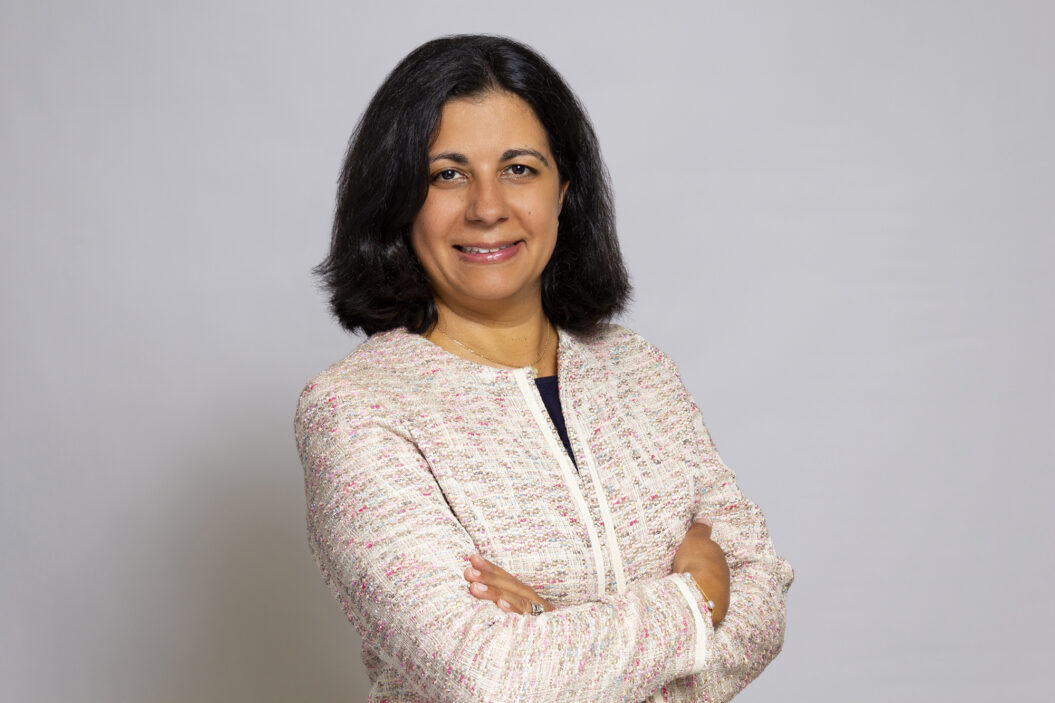
As part of the partnership between the Portuguese Diaspora Council and Jornal de Negócios, Elisabete Ramalho, Industry Leader at Google, shares insights into her personal and professional journey in Switzerland, as well as her reflections on Portugal’s economic potential.
1 — What led you to leave Portugal?
A deep curiosity and the constant desire to know what lies beyond the vast Atlantic Ocean, which I learned to admire from a very young age, an ambition that has always challenged me to get out of my comfort zone and take risks. The confidence that I could become a citizen of the world.
Starting in Aveiro, my academic and professional journey took me across borders from Dublin to Paris, from San Francisco to Zurich, having experienced, for work and leisure reasons, all continents.
I was looking for a global ecosystem where I could merge my passion for social sciences and marketing with information systems management and artificial intelligence, finding in technology the ideal vehicle to impact the business of some of the world’s largest companies in their respective industries, and even more importantly, to be part of a company with products that are part of the lives of billions of people who cross cultural boundaries.
2 — What advantages or disadvantages did the fact that you are Portuguese bring you?
I think in a very positive and optimistic way. I can’t think of a disadvantage of being Portuguese – I am and always will be with great pride. I bring with me curiosity, resilience and stamina — the Portuguese “don’t give up”, and that is a distinctive mark that I think is very much ours. We continue to search, to discover what is possible (and impossible!), to make it happen even when the “old men of Restelo” tell us that it is difficult. There are many examples of success abroad and inside.
In addition, I bring with me the values I inherited from my maternal grandparents, who ran a successful bakery in Portugal in the 50s. They taught me the importance of hard work, humility and knowing the needs of each customer intimately (they knew the name and request of each person who walked through the door!). This ability to create genuine, personalized, close and lasting connections is something very Portuguese.
3 — What obstacles did you have to overcome and how did you do it?
I see obstacles as opportunities for learning and developing “muscles” that become new professional and personal skills.
Over these almost 20 years since I left Portugal, I felt that the biggest challenge is to manage the distance from those we love the most and think about the opportunities I could be missing in Portugal, contributing to creating value in the country instead of doing it abroad.
From a more professional point of view, knowing if the opportunity I choose is the right one at a given time and if it helps me to learn something new, especially in a highly competitive, fast-paced context where we have to stay relevant, always.
I overcome challenges, staying true to my leadership principles, facing success and my mistakes with the same humility and the use of mentors and strategic coaches who challenge us to step out of our comfort zone and guide us on the path in an authentic way.
4 — What do you admire most about the country where you are?
I bring with me the best of the countries I lived in – the courage of Portugal, the sense of risk of the United States, the importance of humour in Ireland, the savoir faire of France and the sense of a more organised life in Switzerland.
In Switzerland, I admire the precision, loyalty and mutual respect that govern both social life and business. It is an ecosystem that is highly conducive to innovation and entrepreneurship, where there is a real respect for life balance. The influence of universities on the life of the country is admirable – it has two of the best universities in the world in terms of science and technology.
5 — What do you admire most about the company or organization where you are?
Google is a unique organization, especially compared to other large-scale technology companies. Although it has grown immensely in the last 20 years, its values and DNA remain – the focus on the user, an innovation that makes the impossible possible, and the fact that organizational culture puts people first. At Google, I learned that if you have the right people on your team, strategy and goals must be co-created — it can’t be just one person deciding. The leader’s role is like a conductor of an orchestra – to guide, bring out the best talent in each one and know when to leave a position to give opportunities to others who are ready and can be better at their performance. At that point, it’s up to the leader to pave the way and grow into an area they haven’t experienced yet.
In addition, I admire the commitment to using AI and technology for greater purposes, meeting positive societal impact and finding solutions to some of the biggest human challenges – innovative treatments to fight rare diseases and cancer, solutions to reduce the impact of climate change on people’s lives and to obtain energy sources.
6 — What recommendations would you give to Portugal and its entrepreneurs and managers?
Learn from the best that is done in other countries – in terms of urban design and the creation of green spaces that promote movement, the independence of children and young people, the experiences of communities that support each other locally. In terms of business competitiveness – with measures to attract qualified talent that produces and is compensated. With leaders in public and private areas who are chosen for their level of competence and potential. With decisions that are supported by what the information analyses show and not by emotions or opinions.
7 — In which sectors of the country where you live could Portuguese companies find customers?
In Switzerland, the market deeply values quality, design and personalized service. Portuguese companies find excellent opportunities in the consumer sectors – for example, fine wines and gourmet artisanal products, in the bespoke luxury textile and footwear industry, and in highly specialized technological services, where Portuguese technical talent can offer agility, competence and an innovative spirit.
8 — In which sectors of Portugal could companies in the country where you live want to invest?
Swiss investors value Portuguese stability, excellence and engineering talent, which stands out for its historical resilience. Portugal is extremely attractive for investment in Investment and Development Centers and Technology Hubs, Energy Transition and Sustainability projects, and in Deep Tech startups, which need experienced capital that evolves from ideas to companies with global reach.
9 — What is the competitive advantage of the country in which you live that could be replicated in Portugal?
The creation of an ecosystem to support entrepreneurship based on mentoring and quality strategic advice.
In Switzerland, boards of directors and advisors genuinely support founders, opening doors for investors and partners while constructively challenging them.
Portugal would benefit greatly from a structured network where experienced leaders share their accumulated knowledge in a systematic way to “guide” the next generation of entrepreneurs.
10 — Are you thinking of returning to Portugal? Why?
This is a constant question in our family life. It will depend on where my children want to study and live in a few years. I would like to come back one day. My goal would be to channel all this international experience, and the passion for innovative artificial intelligence concepts for the development of Portugal.
In particular, I want to dedicate myself to causes that are very dear to me, such as supporting young people and adolescents and developing initiatives focused on neuro-diversity.