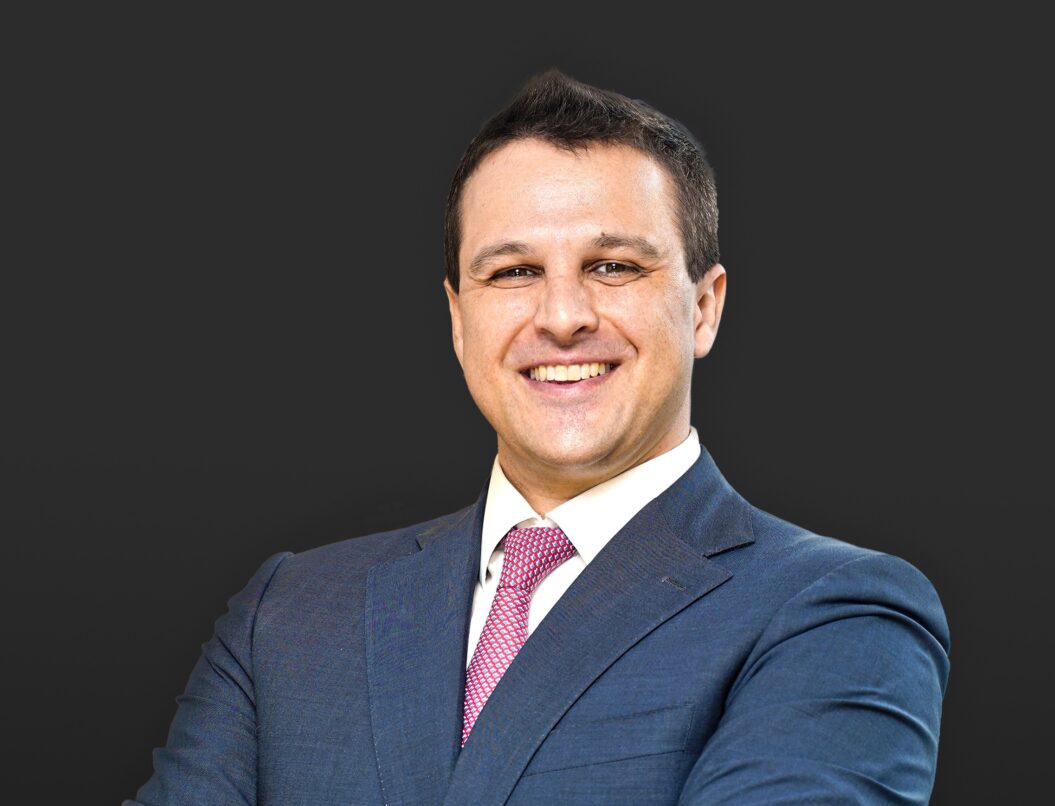
As part of the partnership between the Portuguese Diaspora Council and Jornal de Negócios, José Lupi, lawyer and Managing Partner of Lupi & Associados, shares insights into his professional journey in Macau and his perspective on the Chinese economic model.
1 — What led you to leave Portugal?
After completing my law degree in Portugal, I realized that the national market, although solid, offered fewer opportunities for accelerated growth on a global scale when compared to a market like China. I chose Macau as an entry point and operational base more than fifteen years ago, due to its strategic position as a historical platform for connecting China and Portuguese-speaking countries. This choice allowed me to access the vast Chinese market — from mainland China, where I was based in Chongqing and Beijing, to the Greater Bay Area and the Belt and Road Initiative projects. The combination of my European legal background with the economic dynamism and transformation of China was decisive. Macau and Hong Kong are now my base, but the main focus of my work is the Chinese market, at the interface between two worlds that I dominate: the Lusophone and the Chinese.
2 — What advantages or disadvantages did the fact that you are Portuguese bring you?
Being Portuguese is, without any doubt, a huge competitive advantage. Lusophone identity generates immediate confidence with Chinese investors and companies looking for partners in Portugal, Lusophone Africa, Brazil and other Portuguese-speaking markets — strategic regions for the Belt and Road Initiative. This “cultural diplomacy” facilitates the construction of long-term relationships in an environment where cultural proximity is valued. Our reputation for adaptability and relational excellence opens doors that are sometimes more difficult for other nationalities. I do not identify significant disadvantages; On the contrary, the Portuguese passport and training in European civil law confer additional credibility in international transactions involving Chinese and Portuguese-speaking jurisdictions.
3 — What obstacles did you have to overcome and how did you do it?
The main challenges in the Chinese market were the initial language barrier and the difference between legal and cultural business systems. Mainland China’s extremely fast pace and regulatory complexity require constant adaptation. I overcame these obstacles with an intense and continuous investment in Mandarin — today I am fluent and use it daily in negotiations and contracts. At the same time, I have built a solid network of contacts through business associations and active participation in forums in the Greater Bay Area and the Belt and Road Initiative. Persistence, humility to learn and the Portuguese ability to adapt were decisive. Today, this combination of linguistic and cultural skills is one of the main differentials of our firm in the Chinese market.
4 — What do you admire most about the country where you are?
What I admire most about China is the long-term strategic vision and ability to execute on an unprecedented scale. The economic, technological, and urban transformation of the last few decades — with massive investments in infrastructure, innovation (AI, 5G, renewable energy), and regional integration of the Greater Bay Area — is impressive. I value the deep respect for education, for the discipline of work and for the harmony between tradition and modernity. China not only builds the future, but also plans it with precision through five-year plans that articulate the public and private sectors in an exemplary way. It is a country where collective ambition translates into concrete results and where the Belt and Road Initiative has redefined global trade.
5 — What do you admire most about the company or organization where you are?
At Lupi & Associados, headquartered in Macau, as an operational base for the Chinese market, I admire the unique combination of international legal expertise with deep knowledge of the Chinese market. As a founding partner, I am proud to have built a multicultural and multilingual team (Portuguese, Mandarin, Cantonese, English, Italian, French and Spanish) specialized in mergers and acquisitions, foreign investment and corporate law. I highlight our strategic partnership with a leading international office that will be announced soon, which allows us to offer integrated and excellent coverage in projects between China and Portuguese-speaking countries. This partnership reinforces our ability to act as a platform not only for languages, but for business cultures, making us true strategic partners of Chinese and Portuguese-speaking companies. The culture of customer proximity, constant innovation and market knowledge is our greatest asset in the Chinese market.
6 — What recommendations would you give to Portugal and its entrepreneurs and managers?
Portugal should decisively bet on China as a strategic priority for internationalization, using the Belt and Road Initiative as a lever and Macau as a privileged gateway. I recommend greater regulatory agility, incentives for internationalization and a coordinated national promotion strategy with Chinese decision-makers. To entrepreneurs I suggest: (i) adopt a long-term vision; (ii) invest in training staff in Mandarin and cultural understanding of China; (iii) privileging real partnerships with Chinese companies, rather than one-off approaches; (iv) focus on sectors where Portugal has a competitive advantage (renewable energy, health, luxury tourism, wine, olive oil, medical technology). China rewards those who demonstrate sustained commitment and mutual respect.
7 — In which sectors of the country where you live could Portuguese companies find customers?
In the Chinese market, the opportunities for Portuguese companies are vast, namely in: renewable energy and energy transition; health and medical equipment; integrated tourism and luxury hospitality; higher education and vocational training; premium food and beverages (wines, olive oils, gourmet products); information technology, cybersecurity and applied AI; sustainable infrastructure; financial services and fintech; and mergers and acquisitions for the entry of Portuguese-speaking capital into China. Our office accompanies Portuguese companies looking for customers and partners in the Chinese market through the Greater Bay Area and the Belt and Road Initiative on a daily basis.
8 — In which sectors of Portugal could companies in the country where you live want to invest?
Chinese companies are showing growing interest in investing in Portugal in the following sectors: renewable energy (offshore wind and solar); luxury tourism and hospitality; ports and logistics (such as Sines); technology and startups; pharmaceutical industry and medical devices; precision agriculture and premium food products; and luxury real estate. China sees in Portugal stability, quality of life, access to the European market and know-how in regulated sectors where it intends to accelerate its international presence.
9 — What is the competitive advantage of the country in which you live that could be replicated in Portugal?
China’s great competitive advantage is the strategic articulation between long-term planning (five-year plans), rapid implementation and strong public-private sector collaboration. Other replicable factors are massive investment in STEM education, the accelerated digitalization of the economy (fintech, e-commerce, smart cities) and the ability to reinvent entire regions through projects of scale such as the Greater Bay Area. Portugal could be inspired by this integrated vision and agility in approving strategic projects to accelerate its own development.
10 — Are you thinking of returning to Portugal? Why?
I am deeply committed to my role as a bridge between China and the Portuguese-speaking world, from the headquarters of our office in Macau. Returning to Portugal is part of my future prospects, but always partially and with a view to complementing the contribution to relations between China and Portuguese-speaking countries also from Portugal. When he is back, it will be to bring the experience accumulated in these more than fifteen years — network of contacts in the Chinese market, in-depth knowledge of the Belt and Road Initiative and ability to structure international operations — and continue to actively contribute to the internationalization of the Portuguese economy. For now, I consider that my greatest contribution to Portugal is precisely here, helping national companies to conquer space in one of the largest economies in the world.