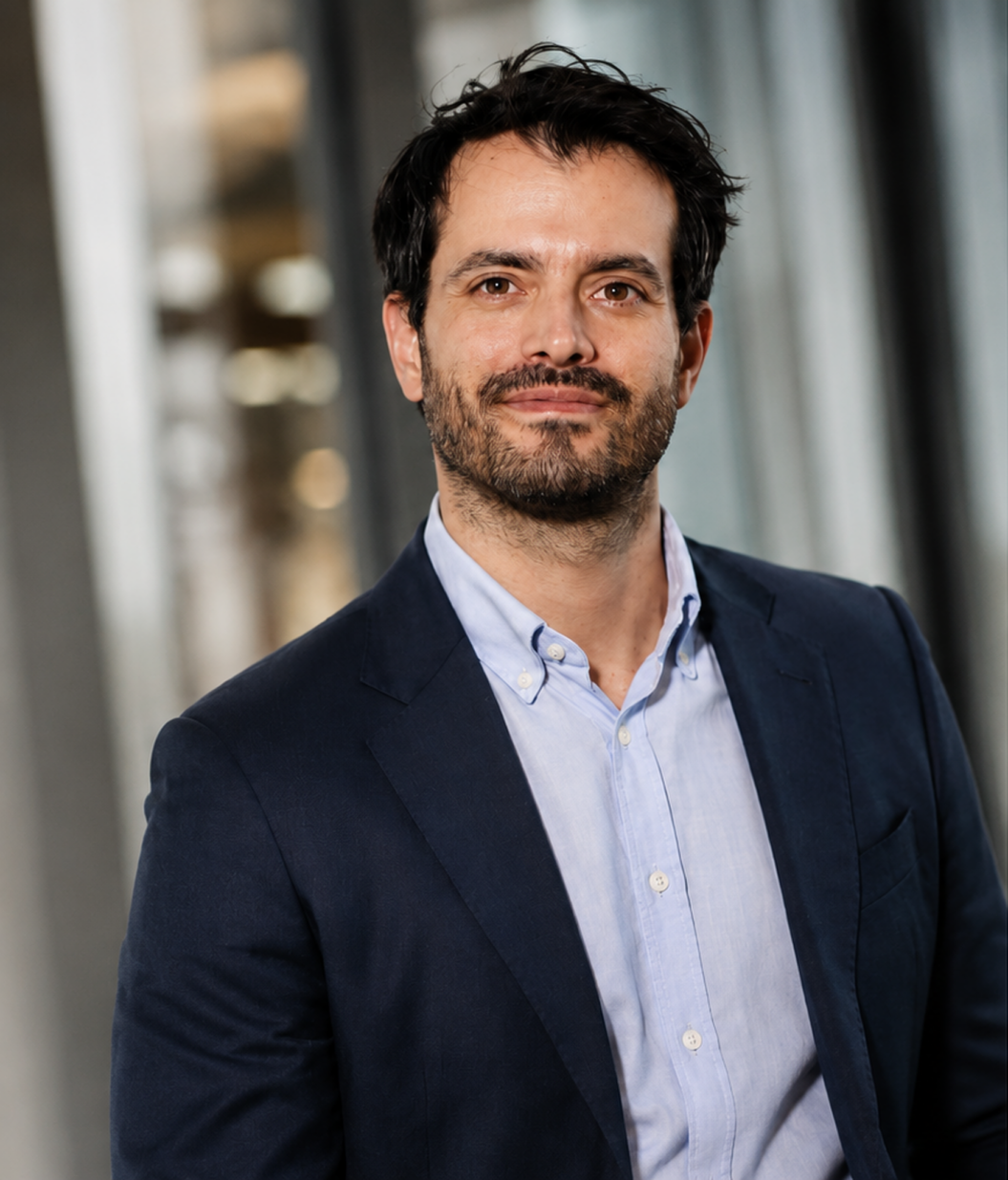
As part of the partnership between the Portuguese Diaspora Council and Jornal de Negócios, Pedro Baliza, Managing Partner at NextBold Capital, shares insights into his personal and professional journey in Vietnam, as well as his reflections on Portugal’s economic potential.
1 — What led you to leave Portugal?
There was no master plan, but there was intention early on. The rest was timing, context and happy chance.
While still in high school, I already had my own company. A gap year working in a start-up in Berlin, followed by a hybrid study and work experience in Finland, opened the door to Southeast Asia. After more than a decade investing and building billion dollar businesses, in 2024 I founded NextBold Capital to invest in emerging markets, from Vietnam.
It is a case to say that there were times when I left entrepreneurship – but it never left the system. Perhaps the same applies to my relationship with Portugal?
2 — What advantages or disadvantages did the fact that you are Portuguese bring you?
In terms of advantages, culture and education are the most visible. Portuguese culture adapts much more to assimilation than other European cultures, and this translates into a natural ability to enter very different contexts without friction. As for education, Portugal trains technically competent people, with a culture of responsibility and dedication that is outstanding.
The disadvantages? I prefer to call them realities. Individually we are strong – the diaspora is a symbol of this. The problem is structural: we lack the capacity for clustering and cross-border association. There is still no organized effort to make Portuguese people around the world collaborate economically – financial structures, knowledge transfer, flow of capital, common expansion objectives. This fragmentation is our biggest collective handicap. There is a saying that sums up this situation well: a Portuguese is a hero in someone else’s land and a wretch in his own.
3 — What obstacles did you have to overcome and how did you do it?
None that have marked me in any particular way. I was perhaps lucky and fortunate enough to find the right people at the right times – and, in markets as diverse as those in Southeast Asia, I quickly learned that we always have more in common than what separates us.
Perhaps the only wish: that we had more direct flights to Lisbon.
4 — What do you admire most about the country where you are?
Vietnam has gone from a subsistence economy to one of Asia’s most consistent engines in less than a generation – not by accident, but due to three critical factors.
First, the culture of execution. You spend less time discussing how and when, you take more risks, and when something doesn’t go well, the focus is on learning and moving forward.
Second, the speed of decision-making. In private companies, decisions are made quickly and the effort is put into operationalizing and not deliberating.
Third, cohesion. Vietnam has created a culture of unification strong enough to bring second- and third-generation Vietnamese back into the market, the country, and citizenship. This return of brains and capital has been a dynamo of development.
5 — What do you admire most about the company or organization where you are?
NextBold Capital is an investment house with a unique operational and risk management model in the region. Our results are due to three secret weapons.
First, the thesis. More than looking at markets, we look at inflection points. Southeast Asia is experiencing an unprecedented transition: hundreds of millions of people entering an income level where, for the first time, they can choose what they consume. In this region, we invest in companies experiencing moments of transformation: management changes, divestments, transitions from public to private, or expansions into regional markets.
Second, the operating model. Most global funds invest in and monitor what works in Europe, but not so much in the rest of the world. Knowing the market without the operational playbook to help on-the-ground leaders grow and prevent bad decisions is insufficient. Our approach was built for exactly that.
Third, the team. We recruit and train top talent in these markets, and that’s what allows us to do what we do.
6 — What recommendations would you give to Portugal and its entrepreneurs and managers?
Nothing new, just a little perspective.
First: think about European and global markets from day one. There is no reason to define a strategy around 10 million people, when you have access to a market of 450 million – this access is even easier today with AI. The small country complex is the biggest enemy of ambition.
Second, build a diversified equity and capital structure early. The right capital brings network, experience, and access to markets – not just money.
Third: make use of the diaspora. There are Portuguese in relevant positions in practically every market in the world, with a genuine desire to help. A phone call from a Portuguese expatriate opens doors that years of formal diplomatic effort cannot.
7 — In which sectors of the country where you live could Portuguese companies find customers?
Vietnam is one of the most open economies in Southeast Asia, and there are five sectors with direct opportunity for Portuguese companies.
In the agro-industry, the Netherlands realized this decades ago and is now the largest European investor in the sector. European know-how in food processing and sustainability is in growing demand.
In healthcare, 85% of medical devices are imported and demand is growing faster than quality supply.
In the consumer market, an exploding middle class, which has an appetite for quality products and services.
In value-added manufacturing, Vietnam is positioned as a serious alternative to China+1.
In renewables, Vietnam went from 4 MW of solar capacity in 2015 to more than 18 GW in 2024, being the clear leader of ASEAN. The ambitions for 2030 are clear. To get there, there is a lack of capital and technology, where Portugal has an advantage.
8 — In which sectors of Portugal could companies in the country where you live want to invest?
Portugal has a unique argument: simultaneous access to the European market, the CPLP, and Africa. For an Asian investor with global ambitions, this is hard to ignore.
Premium real estate and tourism are the most obvious entry point – an asset class close to what Asia is used to.
In logistics, the Port of Sines is the first deep-water port in Atlantic Europe, connected to more than 200 ports in 80 countries – this is a relevant conversation for SEA companies thinking about global supply chains.
In technology, Portugal has qualified talent, with competitive costs and access to the EU market, as, in fact, the Web Summit helped to signal.
In the agribusiness, there is growing interest from Asian capital in quality European food value chains.
In education, institutions such as Nova SBE (my alma mater) and Católica have shown that there is a market for education exports.
Portugal, in an interconnected world, has a lot to offer. What is missing is to tell this story better.
9 — What is the competitive advantage of the country in which you live that could be replicated in Portugal?
First, the culture of risk and speed of decision. Here you test, make mistakes, correct and move forward, without the weight of the stigma of failure. Portugal has the ingredients to be much more agile than it is.
Second, the deliberate investment in infrastructure to create financial, manufacturing and technological hubs. Portugal has the geographical position and the talent; it lacks the commitment to create hubs with an international scale.
Third, fiscal aggressiveness to attract investment. Vietnam uses tax incentives in a much more targeted way: preferential rates of 10% for priority sectors, exemptions in the early years, and a structure designed to attract foreign capital.
10 — Are you thinking of returning to Portugal? Why?
For now, family, friends, Glorioso and the national team keep me close to “home”. In the future, returning more regularly is the goal; more permanently, it may be less on the horizon. But whatever the future, the goal is to contribute to Portugal in the best possible way.