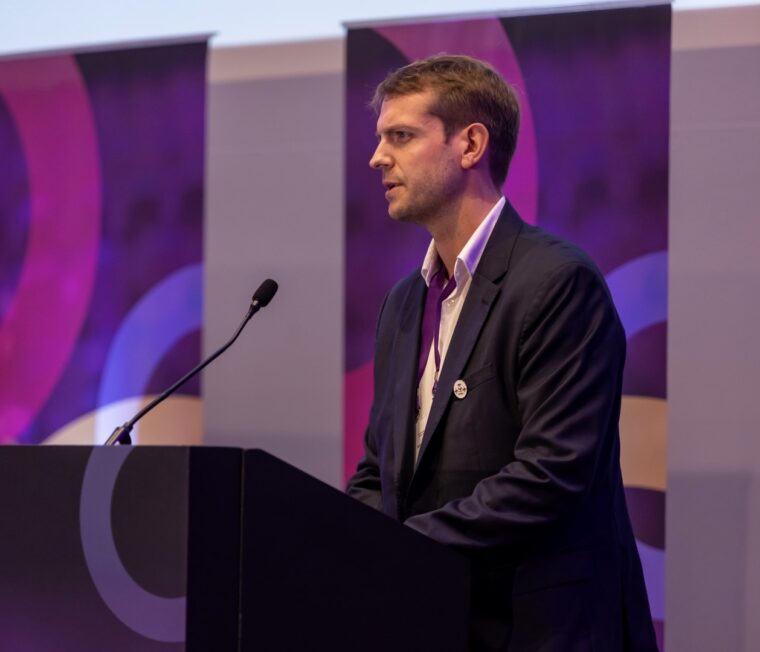
As part of the partnership between the Portuguese Diaspora Council and Jornal de Negócios, Sílvia Renda, Chief Advisor & Head of Government Relations at the Australian Financial Complaints Authority and a member of the Portuguese Diaspora Council in Australia, shares insights into her international journey since leaving Portugal at the age of 16.
1 – What led you to leave Portugal?
I left Portugal at just 16 years old, accompanying my immediate family in search of a better life and new opportunities. It was a time when international mobility was beginning to open new horizons, and my parents believed that Australia could offer us quality education, economic stability, and a more promising future. Despite my young age, I clearly remember the mix of curiosity, fear, and excitement I felt as I embarked on a new life. It was a profound change—not only geographically, but also emotionally—the beginning of a journey that shaped my identity between two worlds.
2 – What advantages or disadvantages has being Portuguese brought you?
For me, being Portuguese has always been an advantage. Our culture teaches us to be resilient, creative, and supportive. The adaptability and empathy that characterize the Portuguese people helped me integrate more easily into a multicultural society like Australia. However, it wasn’t always easy. At first, my accent and the shyness of arriving in a new country made me feel different. But over time, I realized that this difference was actually a strength: it gave me a unique perspective and a genuine connection to multiple cultures. Today, I consider being Portuguese one of my greatest personal and professional assets.
3 – What obstacles did you have to overcome and how did you do it?
Cultural and linguistic adaptation was the first major challenge. Arriving as a teenager in a new country meant starting over—school, friends, language, habits. I had to learn to be flexible, persistent, and confident in an environment where everything was different. Later, in my professional journey, I faced the challenge of building a career in a competitive country, far from my roots. I did so by investing in education, working hard, and building relationships based on respect and integrity. I learned that trust and credibility know no borders: they are earned through consistency, humility, and results.
4 – What do you admire most about the country where you live?
What I admire most about Australia is the way it balances diversity, opportunity, and quality of life. It is a place that values merit and individual effort, but also the common good, respect, and empathy. This combination of fairness, humanity, and hope has deeply influenced me from an early stage.
I arrived in Australia at 16—an age when everything feels intense and the world seems vast. Starting a new life in a different country is never easy. Like anyone who migrates, I faced challenges: the language barrier, homesickness, cultural adaptation, and the feeling of having to start from scratch. These were years of learning, of finding my place, and of gradually building a new identity between two cultures.
It was precisely through these difficulties that I learned the true meaning of resilience and the value of inclusion. I discovered a society that, despite its imperfections, believes in opportunity and fairness—where hard work, respect, and dedication truly open doors. Gradually, Australia stopped being just the country where I lived and became the place that welcomed me, challenged me, and helped me grow.
Socially, I admire the open-minded spirit and strong sense of community. There is a genuine appreciation of diversity—people from all over the world live, collaborate, and learn together. Life here is balanced: there is space for work, family, nature, and connection.
Professionally, I admire the culture of trust and the concept of a “Fair Go”—the deeply Australian belief that everyone deserves a fair chance. It is a society that encourages people to contribute, innovate, and support one another.
I also admire the civic maturity and social engagement that are part of Australian life. People participate—they take an interest in public issues, follow debates, and have genuine trust in institutions. Even when opinions differ, there is respect for the democratic process and for the idea that dialogue is the way to resolve differences.
Looking back, I feel grateful to have grown up in a country that taught me so much about courage, empathy, and belonging. Australia has not only given me opportunities—it has also given me a sense of purpose and the desire to give back to the community that helped me build my life.
If I could offer advice to anyone dreaming of coming to Australia, I would say: come with an open heart and be prepared to work, learn, and start again. There will be challenges—every new beginning has them—but there will also be generous people, unexpected opportunities, and a society that, over time, will make you feel at home. The journey is not easy, but it is deeply worthwhile.
5 – What do you admire most about your company/organization?
I work in an organization that plays a fundamental role in protecting consumers and promoting justice and transparency in the Australian financial sector. What I admire most is its commitment to human values—protecting people, promoting fairness, and ensuring that institutions act ethically. I also value the inclusive and diverse environment, which allows each person to bring their experience and identity to the table. I feel proud to be part of an institution that combines professionalism with purpose and strives to balance technical rigor with social empathy.
6 – What recommendations would you give to Portugal and its business leaders?
Portugal has extraordinary talent and a growing entrepreneurial culture. My recommendation is to continue investing in innovation, internationalization, and strategic partnerships. Portuguese entrepreneurs should have greater confidence in their abilities and look to the world without fear—there is room for “Made in Portugal” across many sectors, from technology to the green economy, as well as sustainable tourism and the creative industries. It is also essential to invest in people: value merit, diversity, and collaboration. That is what transforms good ideas into lasting impact.
7 – In which sectors in your country of residence could Portuguese companies find clients?
In Australia, I see significant opportunities for Portuguese companies in areas such as renewable energy, financial technology (fintech), education, tourism, and high-quality agri-food products. Australian consumers value authentic, sustainable products with a story—something Portugal has in abundance. There is also room for academic and scientific cooperation, as well as technological solutions that support sectors such as healthcare, education, and sustainability.
8 – In which sectors in Portugal might companies from your country of residence want to invest?
Portugal is increasingly attractive for foreign investment, particularly in clean energy, technology, sustainable real estate, and high-quality tourism. Australian companies can find in Portugal a strategic partner within Europe, with skilled talent, political stability, and an excellent geographic location. I also see opportunities in the maritime and port sectors, as well as in scientific research related to climate change and the blue economy.
9 – What competitive advantage does your current country have that could be replicated in Portugal?
Australia has a very pragmatic, results-oriented culture. It invests heavily in trust—between people, businesses, and institutions—which creates a productive and transparent ecosystem. Another advantage is the focus on cross-sector collaboration: government, the private sector, and the community work together to solve common problems. This model of cooperation, combined with an open mindset toward diversity, could be further developed in Portugal, bringing significant economic and social benefits.
10 – Do you plan to return to Portugal? Why?
I do not plan to return to live in Portugal permanently, as I have been fully integrated into Australia for many years. This is where I have built my life, my career, and my sense of belonging. However, Portugal will always be in my heart. It is the place of my roots, my language, my identity, and my deepest memories. I will always remain connected to my country—whether through culture, people, or projects that strengthen the link between Portugal and Australia. It is this bridge that I strive to keep alive every day.