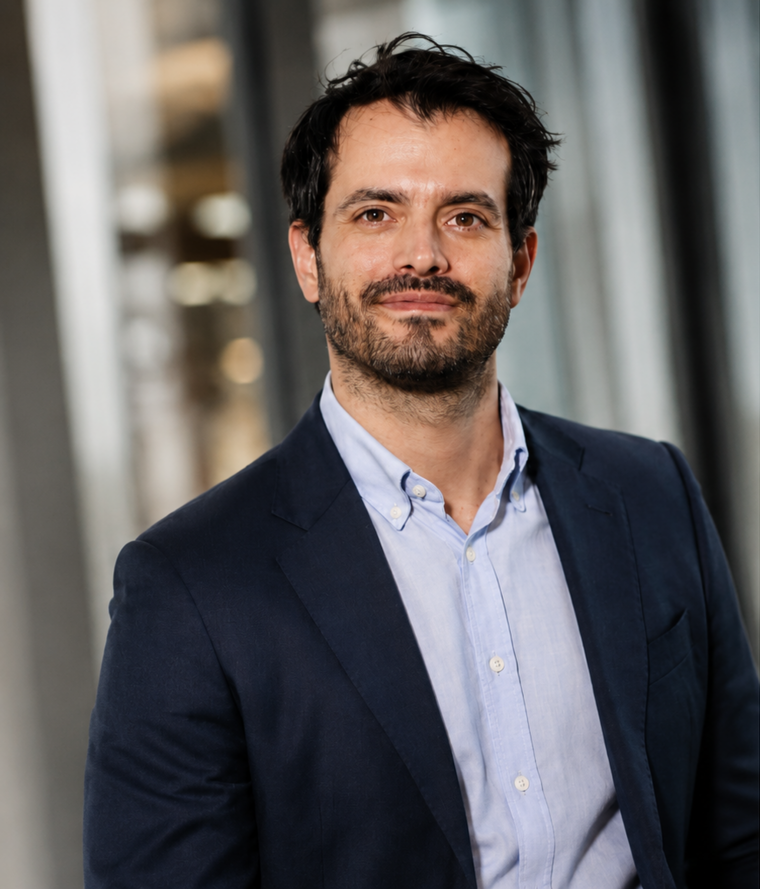
As part of the partnership between the Portuguese Diaspora Council and Jornal de Negócios, Portuguese professionals who have distinguished themselves internationally share their career journeys and perspectives on business opportunities abroad and Portugal’s potential to attract companies and investment.
1. What led you to leave Portugal?
I left Portugal primarily for professional reasons and because I wanted to gain genuine international experience. I was looking for an environment that would expose me to different markets, cross-border transactions and different ways of doing business. The opportunity to work in Asia, initially with strong ties to Macau and subsequently from Hong Kong, was a challenge I found difficult to turn down.
I did not see leaving Portugal as distancing myself from the country, but rather as an opportunity to broaden my horizons and acquire skills that I would have found difficult to develop had I remained in the same environment. Asia required me to understand different business cultures, decision-making processes and legal and financial frameworks. It also taught me to recognise the importance of personal relationships, persistence and trust in building lasting business partnerships.
Over time, I realised that living abroad often makes us more aware of our Portuguese identity. We remain connected to our country, follow its development and identify opportunities to bring Portugal closer to the markets in which we operate. This is precisely one of the bridges I seek to build through my professional activity.
2. What advantages or disadvantages has being Portuguese brought you?
Overall, being Portuguese has been an advantage. Portugal is generally associated with an open, friendly and adaptable culture. The Portuguese have a long tradition of engagement with other parts of the world and a particular ability to understand different cultural sensitivities. In Asia, where personal relationships and trust are essential, the ability to listen, adapt one’s communication style and find common ground is particularly valuable.
Portugal’s historical ties with Macau are also an important distinguishing factor. Macau retains a legal system rooted in Portuguese law, has Portuguese as an official language and serves as a platform connecting China with Portuguese-speaking countries. For a Portuguese lawyer working on transactions involving Macau, Hong Kong, China and Portugal, this legal and cultural heritage represents a tangible advantage.
The main disadvantage is the limited awareness of contemporary Portugal. Many people in Asia know the country for its tourism, football, wine or history, but are unfamiliar with Portuguese capabilities in areas such as technology, engineering, renewable energy, healthcare, industry, financial services and research. It is our responsibility to overcome this incomplete perception and present Portugal as a modern, sophisticated country capable of delivering high-value-added solutions.
3. What challenges have you had to overcome, and how did you overcome them?
The first challenge was learning to work in a very different cultural environment. In Asia, what is said does not always convey the full message. It is necessary to interpret the context, understand what is left unsaid and recognise that building trust can take longer than formal negotiations. This requires humility and a willingness to observe before drawing conclusions.
Another challenge was developing a professional practice across several jurisdictions while navigating different legal systems, business cultures and client expectations. I work in areas such as finance, capital markets, real estate and investment, often on transactions involving Hong Kong, Macau, China and Portugal. This requires continuous learning and, above all, the development of multidisciplinary teams capable of coordinating the different elements of a transaction.
I overcame these challenges through persistence, preparation and the gradual development of a professional network. In Asia, reputation is not built overnight. It results from consistency, keeping one’s word and being present when difficulties arise. I also learnt that we should not try to impose our own way of working. We must remain true to our values while adapting how we put them into practice.
4. What do you admire most about the country where you live?
What I admire most is its extraordinary ability to get things done. There is a culture of speed, pragmatism and results-oriented thinking. People value time, make decisions quickly and seek to turn ideas into concrete initiatives. This approach is evident in both large institutions and small and medium-sized enterprises.
I also admire the combination of legal certainty, economic freedom, financial sophistication and close ties with mainland China. Hong Kong continues to play an important role as an international business, trade and financial centre and as a gateway to the Guangdong-Hong Kong-Macao Greater Bay Area. Its economy is heavily service-oriented, with services accounting for 93.6% of GDP in 2024, and it maintains a significant position in financial markets, wealth management and international investment flows.
It is a demanding and competitive society in which there is nevertheless a strong belief that hard work, qualifications and individual initiative can create opportunities.
5. What do you admire most about the company or organisation you work for?
At MdME, what I admire most is its ability to combine local expertise with an international perspective. The firm has developed a particularly distinctive position connecting Macau, Hong Kong, mainland China and Portuguese-speaking markets, particularly Portugal. This combination enables us to understand the economic, institutional and cultural context in which our clients make decisions.
As the partner responsible for the Finance and Real Estate practices and for the Hong Kong office, I have the opportunity to work with a multicultural team on real estate investment, financing, project finance and capital markets transactions.
I also admire the firm’s entrepreneurial spirit. Its size allows us to remain agile and offer clients direct partner involvement without compromising the technical sophistication required for complex transactions. In a constantly evolving market, this close relationship with clients and ability to adapt are essential. Rather than providing an isolated legal service, we seek to understand our clients’ commercial objectives and help them identify practical, executable solutions.
6. What recommendations would you give Portugal and its business leaders and managers?
Portugal needs to be more ambitious in how it presents itself internationally. We have companies, talent and expertise of international calibre, but we do not always communicate these capabilities consistently enough. We need to move away from an approach based primarily on price competitiveness and towards a strategy built on innovation, branding, specialisation and added value.
I would advise Portuguese business leaders to take a long-term approach. Entering Asian markets should not be treated as a succession of isolated commercial initiatives. It requires a sustained presence, local partners, product adaptation and continued investment in building relationships. Companies need to visit markets regularly, understand distribution channels and accept that building trust often precedes commercial results.
Portugal should also reduce administrative complexity and provide greater predictability in licensing and investment procedures. A country competing to attract international capital needs to offer swift decision-making and stability. At the same time, it should make better use of the Portuguese diaspora. Portuguese professionals living abroad know the decision-makers, local business practices and barriers to market entry. This network should be systematically integrated into the country’s external economic strategy, in coordination with AICEP, chambers of commerce, embassies and business associations.
7. In which sectors could Portuguese companies find customers in the country where you live?
Hong Kong is a sophisticated market, with discerning consumers, high purchasing power and considerable exposure to international brands. I see opportunities for Portuguese companies in high-quality food products, wine, olive oil, fish, canned goods, meat, pastries and gourmet products. Differentiation should be based on origin, authenticity, food safety, sustainability and the ability to tell a compelling brand story.
There are also opportunities in clothing, footwear, technical textiles, jewellery, watches, cosmetics, furniture, lighting, cork and construction materials. In 2025, Portuguese exports to Hong Kong included watches, electrical and electronic equipment, clothing, cosmetics, machinery, footwear, pharmaceutical products, meat and fish preparations, beverages, ceramics, cork and furniture.
In the services sector, I would highlight financial technology, cybersecurity, artificial intelligence, enterprise software, engineering, architecture, clean energy, waste management, healthcare and smart-city solutions. Hong Kong should be seen not only as an end market, but also as a regional platform. A well-structured presence can facilitate access to the Greater Bay Area and other Asian markets. However, companies need to select their partners carefully, protect their intellectual property and adapt their offerings to local preferences and requirements.
8. In which sectors in Portugal might companies from the country where you live be interested in investing?
Portugal can attract investors from Hong Kong in sectors where it combines high-quality assets, technical expertise and access to the European market. Real estate will continue to attract interest, but investment should focus on projects with a sound economic rationale, such as housing, student accommodation, hospitality, logistics, business parks, data centres and assets related to healthcare and long-term care.
I also see potential in renewable energy, energy storage, electric mobility, infrastructure, advanced manufacturing, biotechnology, health technologies, artificial intelligence, semiconductors, agritech and the blue economy. Portugal has talent, universities and research centres that can support partnerships with Asian companies and investors. In 2025, a Hong Kong delegation visited Portugal to strengthen cooperation in technology and innovation, including meetings with Taguspark and the Oeiras Valley Investment Agency, with a focus on investment, business exchanges and technology transfer.
Portugal can also serve as a platform for investors seeking access to the European Union and Portuguese-speaking countries. To realise this potential, it is essential to present well-structured investment opportunities, supported by credible partners, clear financial information and predictable decision-making processes.
9. What competitive advantage does the country where you live have that Portugal could replicate?
The main competitive advantage Portugal could seek to replicate is a culture of execution. In Hong Kong, there is a strong emphasis on reducing the time between identifying an opportunity, making a decision and implementing it. Speed does not mean an absence of rules. It means having sufficiently clear rules, efficient processes and accountability for those making decisions.
Portugal would benefit from a public administration more focused on results, with enforceable deadlines, better coordination between institutions and more extensive use of digital tools. Investors accept that environmental, planning, tax and regulatory requirements exist. What they find difficult to accept is not knowing how long a decision will take or receiving contradictory interpretations from different authorities.
Another lesson from Hong Kong and Macau is their role as gateways. These cities have developed advantages not merely by serving their local markets, but by facilitating the movement of capital, trade, knowledge and services between different regions. Portugal can fulfil a similar role connecting Europe, the Atlantic and the Portuguese-speaking world. To achieve this, it must turn its geographical position, language, stability and quality of life into an integrated economic proposition, supported by infrastructure, talent, connectivity and legal certainty.
10. Do you intend to return to Portugal? Why?
Portugal remains my home, and I maintain a very close personal and professional connection with the country. I therefore do not see the relationship as a definitive choice between Portugal and Asia. My professional life has been built precisely around connections between different geographies, bringing people, companies, investors and institutions closer together.
In the context of the diaspora, I would add one final point: international mobility should not be understood as a loss for Portugal. When the diaspora remains engaged, shares knowledge, builds relationships and mobilises investment, leaving the country can become an asset for Portugal.